Wagon Wheels Guide: Big vs Small for Sand & Gravel
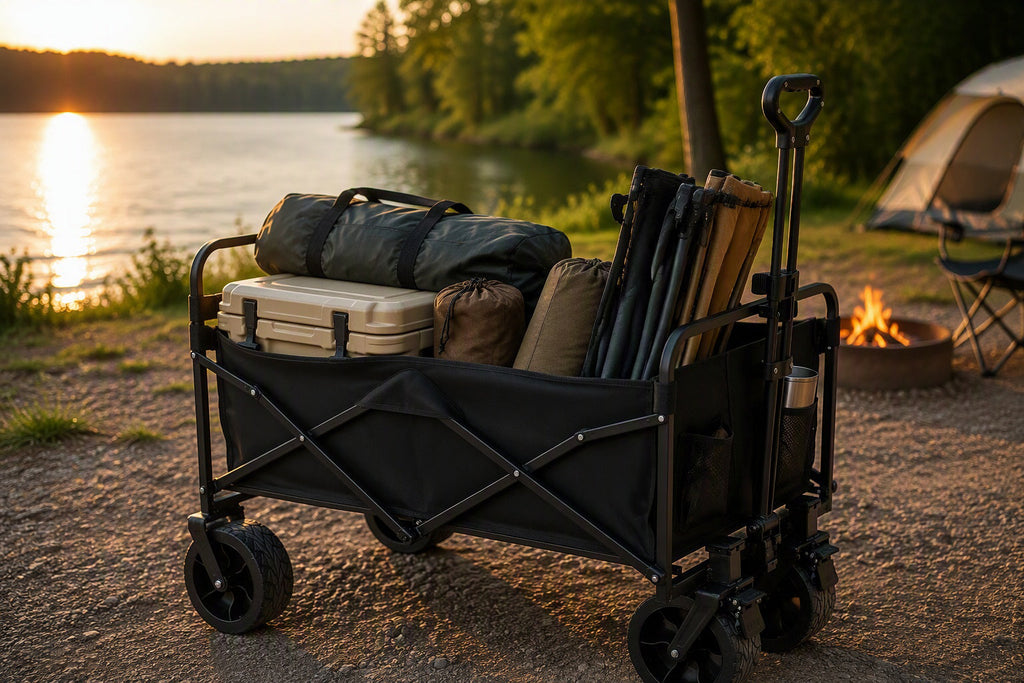
Larger wheels roll over bumps and float on soft surfaces like sand and gravel, while smaller wheels are lighter and more compact for pavement and storage.
Wagon Wheels Guide: Big vs Small for Sand & Gravel
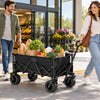
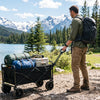
Big wagon wheels beat small wagon wheels on sand and gravel. A larger wheel diameter rolls over bumps instead of digging in, and extra wheel width spreads your load, lowering ground pressure so you sink less. On smooth pavement, though, small wheels stay lighter and easier to store. Big wheel wagons typically run 7–10 inch wheels versus 3–4 inches on small models—an all-terrain wagon like the Finvizo Folding Wagon Cart Big Wheels 460Lbs shows the difference.
What to Look for in Wagon Wheels
Wheel Diameter & Width
Wheel diameter is obstacle clearance: taller wheels roll over ruts instead of slamming in, cutting rolling resistance. Wheel width is flotation—a wider contact patch lowers ground pressure, so you sink less. Beach cart wheels need both.
Pneumatic vs Solid vs Plastic Wheels
Air-filled pneumatic tires and balloon tires cushion bumps but can puncture; solid rubber or PU wheels are flat-free and maintenance-free; hard plastic suits only light loads on smooth ground.
Load Rating & Swivel
Heavy duty wagon wheels need a frame to match: check the load rating, a reinforced steel frame, and 360° swivel wheels up front for maneuverable steering under load.
Wagon Wheel Performance Facts
| Feature | Performance Impact |
|---|---|
| Large Wheel Diameter (7–10 in) | Improved obstacle clearance on gravel |
| Wide Tread (3+ in) | Better flotation on soft sand |
| 360° Swivel Front Wheels | Enhanced maneuverability under load |
Data verified on 2026-09-16. Source: Finvizo Product Specifications.
How to Choose the Right Wagon Wheels
Step 1: Assess Your Primary Terrain
Identify if you spend more time on paved sidewalks or off-road trails. If your route involves frequent grass, gravel, or packed sand, prioritize larger wheel diameters.
Step 2: Evaluate Your Storage Space
Measure your available trunk or closet space. Larger wheels increase the folded footprint of the wagon; if you have a compact vehicle, verify the folded dimensions against your cargo area.
Step 3: Match Load Capacity to Needs
Ensure your wagon's load rating exceeds your heaviest expected gear haul. A higher weight capacity often indicates a more robust frame, which is necessary to support the torque and resistance encountered on uneven terrain.
Top Picks
Our pick across campgrounds, grass, packed sand, and gravel is the Finvizo Folding Wagon Cart Big Wheels 460Lbs: enlarged, widened 360° swivel wheels, a reinforced steel frame rated to 460 lbs, a ~150 L bed, and removable 600D Oxford fabric.
Honest note: Finvizo does not promise easy rolling in deep, soft, dry sand. Big wheels help clearly on packed sand, shallow sand, and gravel.
Same family, different priorities: the 600Lbs compact model folds faster with a storage bag; the 600Lbs tailgate model adds a 160 L bed, tailgate, and 3.6-inch-wide wheels. Compare both in Finvizo's full camping cart collection.
Mac Sports' small-wheel classics suit pavement duty, Coleman covers campground basics, and Beau Jardin targets gardens—none pairs a 460 lb rating with enlarged all-terrain wheels.
Wheel Type Comparison
| Model | Wheel Size | Capacity | Best Terrain | Trade-off |
|---|---|---|---|---|
| Finvizo Big Wheels 460Lbs | Enlarged wide 360° | 460 lbs | Packed sand, gravel | Deep sand still hard |
| 600Lbs Compact | Standard all-terrain | 600 lbs | Campgrounds | Smaller bed |
| 600Lbs Tailgate | 3.6-inch wide | 600 lbs | Gravel, heavy loads | Bulkier fold |
| Small-wheel wagon | 3–4 in plastic | ~150 lbs | Pavement | Sinks in sand |
Big Wheels vs Small Wheels
On Sand
Do wide wheels sink less in soft sand? Yes—the same weight over a larger contact area lowers ground pressure, so the wheel floats instead of plowing. It is why NPS guidance on driving over sand says to air down tires. Big wheels reduce the struggle; they don't delete it.
On Gravel
Larger wheels keep momentum over gravel, bridging gaps where small wheels drop in and jar the frame. Follow the Leave No Trace durable-surfaces principle: stick to durable, established paths.
On Pavement
Small wheels are lighter, turn tighter, and fold smaller—if your routes are mostly sidewalks, a compact small-wheel model is the smarter buy.
Who Should Buy What
- Family camping plus beach trips: a big wheel wagon like the Finvizo Folding Wagon Cart Big Wheels 460Lbs covers mixed terrain.
- Daily deep, soft beach sand: a balloon-tire beach wagon with big wheels is the honest specialist pick.
- City sidewalks and sports events: a lightweight small-wheel utility wagon is all you need.
- Frequent heavy loading: the 600Lbs tailgate model with its 160 L bed.
- Tight trunk space: the 600Lbs compact folding model.
For reference, our Finvizo foldable wagon with enlarged wheels is rated to 460 lbs — the big-wheel route costs less than many small-wheeled budget carts once you factor in the replacement wheels you will never need.
Related reading
- Cheap vs Heavy Duty Wagon: Is It Worth Paying More?
- Best Beach Wagon for Soft Sand: Big Wheels Buying Guide 2026
- Is 50L Backpack Big Enough?
Verified page images


These are existing images from the source page. Review their final placement before publishing.
FAQ
Are bigger wagon wheels better for sand?
Yes, in most cases. Bigger, wider wheels spread the load over a larger contact area, which lowers ground pressure so the wheel sinks less and rolls with less resistance on sand. They also climb over bumps more easily. The honest caveat: no wagon rolls effortlessly through deep, soft, dry sand—big wheels help, but packed or shallow sand is where the difference really shows.
What size wheels are best for a beach wagon?
Look for wheels around 7–10 inches in diameter with a wide tread (roughly 3–4 inches or more). Diameter improves obstacle clearance, while width reduces sinking. Standard small wheels of 3–4 inches in diameter are fine for pavement but tend to dig into soft ground.
Are pneumatic or solid wagon wheels better for gravel?
Pneumatic (air-filled) wheels absorb bumps and roll more smoothly over gravel, but they can puncture and need pressure checks. Wide solid or PU wheels are puncture-proof and low-maintenance, rolling well on gravel if the diameter is large enough. For mixed gravel and campground use, wide solid wheels are the practical compromise.
Can you replace the wheels on a folding wagon?
Often yes—many folding wagons use bolt-on axles, so replacement wagon wheels are available. Match the axle diameter, hub width, and wheel diameter to your frame, and note that a wider wheel only helps if your fork clearance allows it. Upgrading to a larger, wider wheel is the most common sand-performance fix.
Are big wheel wagons harder to fold and store?
Slightly. Bigger wheels add bulk, so a big wheel wagon usually folds a bit larger than a small-wheel model. Most quality folding wagons still collapse flat enough for a car trunk; if storage space is your top priority, compare folded dimensions before buying.
Bottom Line
Pick your wagon wheels for the hardest stretch of your route. If that is packed sand, gravel, or grassy campsites, the Finvizo Folding Wagon Cart Big Wheels 460Lbs is built for it—with honest limits in deep dry sand. Compare in Finvizo's full camping cart collection.

Product Manager at Finvizo and an avid camper who tests gear on real trails. She writes from hands-on field experience to help you pick equipment that actually holds up outdoors.