Camping Gear Beginner Buying Guide
For beginners, building a camping gear collection can feel overwhelming with endless options and technical terms that do not make sense when you are just starting out. The most common mistake is buying too much specialized equipment before understanding what actually matters for your specific camping style. This guide focuses on practical, foundational choices that work for most entry-level campers without requiring extensive outdoor experience to use effectively.
Already past your first few trips? Our camping gear buying guide lays out the full selection framework—activity, trip length, and climate trade-offs—for when you are ready to fine-tune a more specialized kit.
Start with versatile shelter options that forgive common beginner mistakes
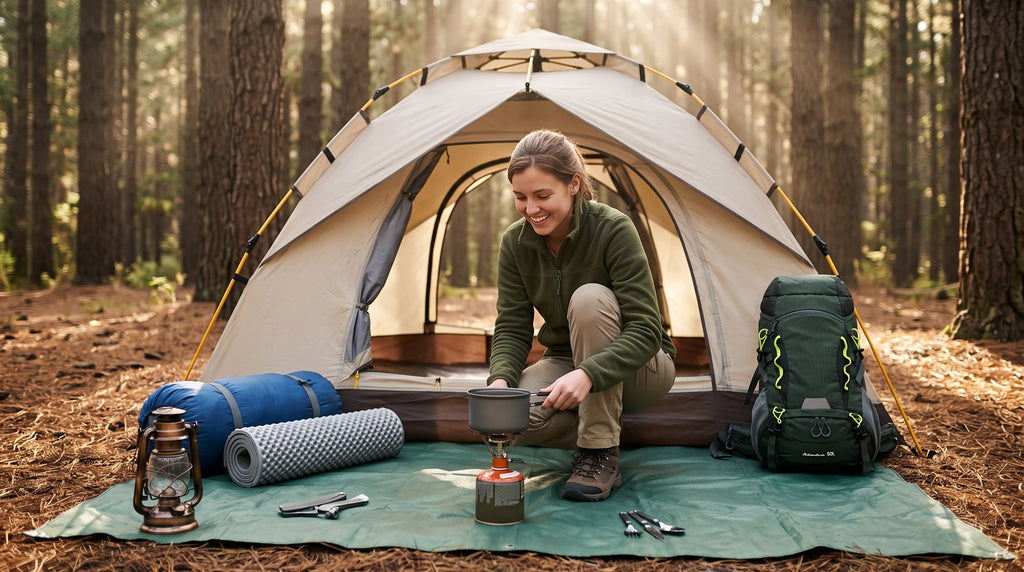
Your first shelter should be simple to set up, forgiving of small errors, and adaptable to different conditions you might encounter as you learn. Look for designs with intuitive connection systems—color-coded poles, obvious attachment points, and straightforward sequencing that makes sense even when you are setting up for the first time in fading light. Avoid ultralight or technical shelters that require precise pitching and tensioning to function properly; these demand experience you have not developed yet. Instead, choose options with reasonable stability margins that still provide adequate protection even if your setup is not perfectly executed. This approach gives you room to learn proper techniques without suffering through uncomfortable nights when your shelter does not perform as expected.
Select sleeping systems that prioritize comfort over minimal weight savings
Beginners often underestimate how much a good night's sleep impacts their entire camping experience. Focus on sleep solutions that provide consistent comfort across different temperatures and sleeping surfaces, rather than chasing the lightest possible options. Look for sleeping pads with sufficient thickness and insulation to buffer you from ground unevenness and cold, even if they pack slightly larger than minimalist alternatives. Choose sleeping bags rated for temperatures slightly lower than you expect to encounter, as beginners typically feel colder than experienced campers in similar conditions. These comfort-focused choices make early camping trips more enjoyable, which encourages you to continue developing your skills instead of giving up after uncomfortable nights.
Build a practical cooking setup around simple, reliable meal preparation
Camp cooking does not need to be complicated to be satisfying. Start with a basic stove system that ignites easily, simmers consistently, and operates reliably in mild wind conditions—avoid complex multi-burner setups or specialized cookware until you know what features you actually need. Select a few versatile pots and utensils that handle the simple meals you are likely to prepare initially, rather than accumulating specialized tools for cooking methods you might never use. Focus on easy cleaning and maintenance, as beginners often struggle with food residue and fuel system maintenance more than the cooking process itself. A straightforward cooking system that works consistently builds confidence faster than an elaborate setup that frustrates you when simple tasks become complicated.
Choose organizational solutions that keep essential items accessible and protected
Nothing dampens camping enjoyment faster than constantly searching for basic items or discovering that something important got wet or damaged. Begin with simple, logical organization—a dedicated bag for sleeping gear, another for cooking supplies, and clear containers for smaller items that tend to get lost. Look for storage options that protect contents from rain, dust, and accidental spills without requiring complex packing procedures. Water-resistant compartments, sturdy zippers, and internal organization pockets help beginners maintain order without developing elaborate systems. This organized approach reduces campsite frustration and makes packing, unpacking, and finding what you need much simpler during those initial trips when everything still feels unfamiliar.
Invest in reliable lighting and basic safety items from your very first trip
Many beginners focus on major gear pieces while overlooking lighting and safety essentials that dramatically impact campsite functionality after dark. Start with multiple light sources—a primary lantern for general campsite illumination, a headlamp for hands-free tasks, and backup lighting options in case one fails. Choose lighting with simple controls, reliable battery life, and adequate brightness for cooking, reading, and navigating around camp at night. Include basic safety items like a well-stocked first aid kit, emergency communication method, and reliable fire-starting tools even for developed campground trips. These foundational items create security and functionality that allows you to focus on learning camping skills rather than struggling with basic campsite operations.
Frequently Asked Questions
How do I choose the right camping gear as a beginner?
In my experience, the biggest mistake is buying too much specialized equipment before you know your style. I recommend focusing on foundational, versatile gear that is easy to use. Avoid ultralight or technical items that require precise setup. Instead, prioritize equipment that is forgiving of mistakes and simple to operate, which allows you to learn the ropes without unnecessary frustration on your first few trips.
What should I look for in a beginner-friendly tent?
When I am testing shelters, I look for intuitive designs. You want a tent with color-coded poles and clear attachment points that make setup straightforward, even in fading light. Avoid technical shelters that demand perfect tensioning to function. A good beginner tent should offer reasonable stability and protection even if your pitch is not perfect, giving you a comfortable night's sleep while you build your skills.
Should I prioritize lightweight sleeping gear?
I always tell beginners to prioritize comfort over weight savings. A good night's sleep is essential for enjoying your trip. Choose sleeping pads with enough thickness to buffer against uneven ground and cold, and pick a sleeping bag rated for temperatures slightly lower than you expect. These comfort-focused choices help you stay warm and rested, which is much more important for your early trips than shaving off a few ounces.
What is the best way to set up a camp kitchen?
Keep it simple. I suggest starting with a basic stove that ignites easily and simmers consistently, even in mild wind. Avoid complex multi-burner setups or specialized cookware you might not actually use. Focus on a few versatile pots and utensils that are easy to clean. A straightforward system that works reliably will build your confidence much faster than an elaborate setup that complicates simple meal preparation.
What safety and lighting gear do I need for camping?
Never overlook these essentials. I always carry multiple light sources, including a primary lantern, a hands-free headlamp, and backup lighting. For safety, you must pack a well-stocked first aid kit, an emergency communication method, and reliable fire-starting tools. These items are vital for campsite functionality and security, allowing you to focus on learning new skills rather than struggling with basic operations after the sun goes down.
Related reading
- Camping Gear Feature Comparison Guide
- Digital Nomad Outdoor Setup: Work from the Wilderness
- Camping Gear Setup & Takedown: A Step-by-Step Field Guide

Vivian J is a Product Manager at Finvizo and an avid outdoor enthusiast. She tests gear on real trails and writes from hands-on field experience to help readers choose equipment that performs reliably outdoors.