Ski Trip Packing: Beyond the Slopes Gear List
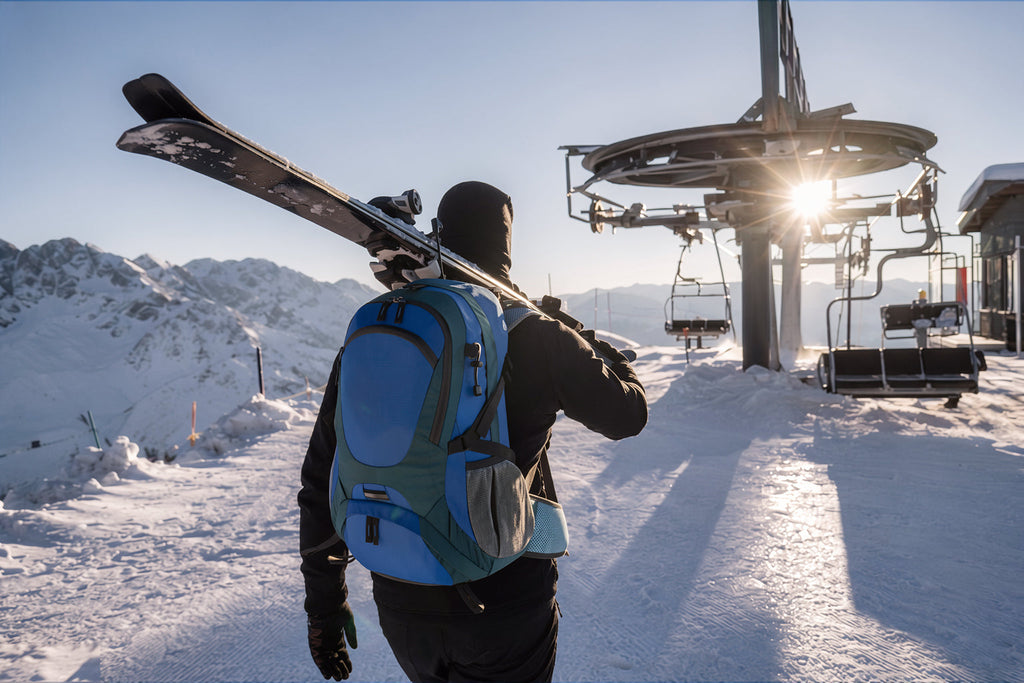
Most ski trip packing lists stop at skis and boots—but ski trip packing beyond the slopes is where trips are won or lost. Half your vacation happens in lodges, lift lines, and parking lots, where beyond-the-slopes gear matters most.
What Is a Ski Trip, Really? (It's Not Just Skiing)
Slopes Are Only Half the Day
A ski day means four to six hours on snow; the rest is lifts, lodges, transit, and sleep. Most lists cover the on-mountain half.
The Three Environments You Actually Pack For
Split your ski vacation checklist into three zones: slopes (wind, cold, sun), transit (hauling), and lodging (recovery).
Essential Gear for a Ski Trip

Protection: Face, Head, and Extremities
Chairlift wind chill can hit -20°F, and snow reflects up to 80% of UV at your face. A moisture-wicking balaclava sits flat under a helmet and will not fog goggles. Browse ski balaclavas built for this.
Unsure which style? Compare balaclava vs. ski mask vs. neck gaiter, and see REI's guide on what to wear skiing.
Carrying: One Bag to Rule the Trip
Resort lodging means hauling gear over snow. A 50-liter pack is the sweet spot for three to five days, swallowing boots and a helmet. Check 50L camping & travel backpacks with waterproof shells.
Hydration & Recovery: The Ignored Essentials
Dry mountain air dehydrates you fast—carry an insulated bottle. Shared lodges mean 6 a.m. lights and snoring; a contoured mask fixes that. See why 3D sleep masks beat flat ones.
How to Pack for a Ski Trip (Step by Step)

Step 1—Heavy and Bulky Goes Low
Boots and helmet ride low, close to your back, for a stable center of gravity. Bag boots so meltwater never touches clothing.
Step 2—Layers in the Middle, Access on Top
Pack thermal base layers in reverse wearing order—first on, topmost. Your lid holds the grab-and-go kit: balaclava, gloves, goggles. Our backpack size guide settles 45L vs. 50L.
Step 3—Balance the Load and External Attachments
Keep sides even, cinch skis or poles tight, and set the hip belt to carry 70% of the weight. Day trips? A 45L airflow backpack is the streamlined option.
4 Ski Trip Tips That Save Your Trip

Tip 1—Pack Your Ski Day Bag the Night Before
Lodge mornings are chaos. Stage your top lid—balaclava, goggles, gloves, hand warmers, snacks—the night before.
Tip 2—Manage Sweat Before It Manages You
Shed layers before you sweat. Wicking fabrics beat cotton next to skin—a damp balaclava freezes on the chairlift.
Tip 3—Protect Your Sleep Like a Lift Pass
Performance equals recovery. Lodge lights, roommates, and travel fatigue kill sleep; a mask plus earplugs under $20 is the cheapest performance gear.
Tip 4—Après-Ski Needs Its Own Mini Kit
Stash dry clothes, slippers, and an insulated mug in a side pocket—comfort doubles when boots come off. Outside's après-ski kit guide nails the lodge list.
Using Finvizo Gear on Your Ski Trip
Finvizo Balaclava: From First Chair to Last Run
The Finvizo Cooling Balaclava 6-Pack sits flat under a helmet, its vented mouth zone keeps goggles clear, and it wicks sweat instead of freezing. Six per pack covers your crew—or your week.
Finvizo 50L Backpack: Car Trunk to Lodge in One Trip
The Finvizo 50L Ultralight Backpack swallows boots, a helmet, three days of clothing, and après kit; straps hold skis or poles, and the waterproof shell sits in snow without soaking through.
Ski Trip Safety Basics
Cold Injuries: Frostbite and Windburn
Learn frostbite signs—numbness, waxy pale skin—and cover every inch below -15°F wind chill. Swap a wet balaclava or neck gaiter for a dry one at lunch.
Altitude, Dehydration, and Sun Exposure
Above 8,000 feet, watch for headache and nausea. Snow reflects UV upward, doubling exposure—pair face coverage with SPF 50.
Know When to Call It a Day
Fatigue causes most accidents, usually after 2 p.m. Bailing in bad weather is not failure—it is how you ski tomorrow.
FAQ
What should I pack for a ski trip besides ski gear?
Beyond skis and boots, pack thermal base layers, mid-layer fleece or puffy, waterproof outerwear, a balaclava or neck gaiter, hand warmers, sunscreen, and SPF lip balm. For off-slope time, bring casual clothes, waterproof winter boots, slippers, a swimsuit for the hot tub, and a sleep mask for shared lodges.
What size backpack should I bring on a ski trip?
A 45-liter pack handles a weekend trip, while 50 liters is the sweet spot for three to five days, swallowing ski boots, a helmet, and layered clothing. Prioritize a comfortable suspension system and external attachment straps over capacity, and check our backpack size guide before buying.
Do I need a balaclava or neck gaiter for skiing?
It depends on conditions. Choose a balaclava for full head, neck, and face coverage in extreme cold, wind, or storm days; it fits under helmets and pairs with goggles. Pick a neck gaiter for milder days or spring skiing—many skiers pack both. See our full comparison.
How many base layers do you need for a ski trip?
Plan on two to three sets of moisture-wicking thermal base layers for a typical three-to-five-day ski trip: one set to wear, one to wash, and one spare. Merino wool resists odor and can be reworn, while synthetics dry faster overnight. Add a dry set reserved only for sleeping in.
Pack Once, Ski More
The best ski trip ends with realizing you forgot nothing. Pack. Protect. Recover. A 50L pack carries it all, a balaclava guards your face, a sleep mask buys back deep sleep.
Shop the Finvizo 50L Backpack, and get the Balaclava 6-Pack for your crew—the ski trip essentials that live beyond the slopes.
Related Guides:
- Hiking Backpack Size Guide
- Balaclava vs Ski Mask vs Neck Gaiter: Winter Face Cover Guide
- 3D Sleep Mask vs Flat Mask: Pressure Test & Complete Buyer's Guide

Written by Vivian J
Product Manager at Finvizo and an avid camper who tests gear on real trails. She writes from hands-on field experience to help you pick equipment that actually holds up outdoors.