Shift Worker Sleep Dark Environment: The Complete Daytime Sleep Guide
Shift Worker Sleep Dark Environment: The Complete Daytime Sleep Guide
Creating a shift worker sleep dark environment is the most important step for better daytime rest. With roughly 20% of the U.S. workforce on rotating shifts, millions struggle to sleep while the sun blazes. This guide shows you how to wake refreshed.
Why a Shift Worker Sleep Dark Environment Is Essential
Daylight triggers circadian rhythm disruption, suppressing melatonin and cutting sleep time by 1–2 hours. CDC research on shift worker sleep health confirms that a shift worker sleep dark environment is one of the most effective non-pharmaceutical interventions available. Total darkness is medical-grade hygiene.
Step-by-Step Guide to Creating a Blackout Sleep Environment
Step 1: Install Blackout Curtains or Window Covers
Windows are your biggest source of light intrusion. True blackout curtains use dense, multi-layer fabric to block 100% of incoming light. Mount the rod 6–12 inches above the frame and extend it past the sides. Use Velcro side seals to eliminate light leaks, or layer aluminum foil on the glass.
Step 2: Eliminate Indoor Light Sources
Once windows are sealed, eliminate rogue indoor light sources. Cover LED alarm clocks, router lights, and power indicators with electrical tape. A rolled towel along your door bottom blocks hallway light. Any light you spot during daylight needs to go.
Step 3: Wear a 3D Contoured Sleep Mask as Your Second Defense
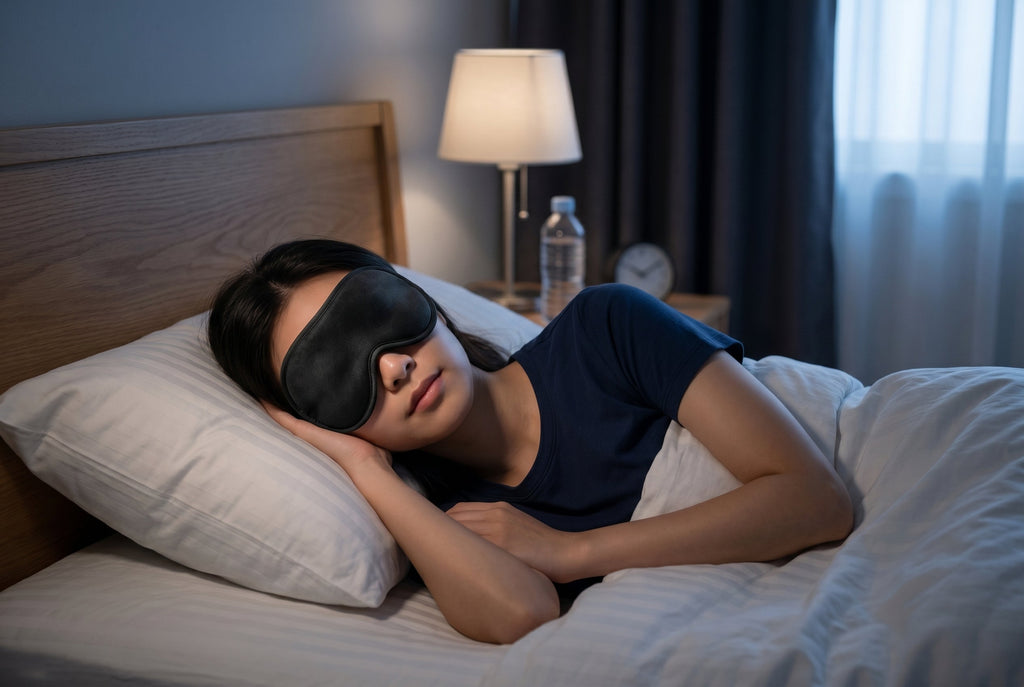
No room is 100% perfect. Light finds gaps. A light blocking eye mask is your portable insurance policy. Unlike flat masks that press on your eyelashes, 3D contoured designs create space around your eyes. The Finvizo 3D Sleep Mask 2-Pack offers zero eye pressure and deep eye cavities—ideal for any shift worker sleep dark environment setup.
The 3D molded cups allow natural REM movement without friction. Pair them with blackout curtains for a two-layer defense against melatonin suppression. Check out the Finvizo 3D Sleep Mask 2-Pack here.
Step 4: Optimize Temperature and Sound
Keep your bedroom between 60°F and 67°F using a thermostat, tower fan, or insulating shades. Daytime temperatures spike 10–15 degrees higher than nighttime, so cooling your room is critical. A white noise machine masks lawnmowers and traffic—pair it with foam earplugs.
Step 5: Establish a Pre-Sleep Wind-Down Routine
Your wind-down routine signals your brain that sleep is coming. Wear blue light blocking glasses for the last 2–3 hours of your shift to filter out melatonin-suppressing light. Implement a 30-minute no-screen rule before bed—use that time for a warm shower or light stretching. Consistency builds an anchor sleep schedule for unconventional hours.
What Features Matter Most in a Sleep Mask for Shift Workers
Not all sleep masks are created equal. Shift workers need gear that performs under real-world conditions. Here is what separates a disposable mask from a serious tool for shift worker sleep dark environments.
| Feature | Why It Matters | What to Look For |
| Light Blocking | 100% blackout prevents melatonin suppression | Multi-layer fabric with nose bridge seal |
| Eye Contour | Prevents pressure on eyelids/eyelashes | 3D molded cups with 10mm+ depth |
| Material | Skin contact for 7–8 hours daily | Breathable memory foam, hypoallergenic |
| Strap Design | Secure fit without slipping during sleep | Adjustable elastic with buckle |
| Washability | Hygienic for daily use | Machine washable or detachable cover |
| Portability | Use during travel/daytime naps | Includes carrying pouch |
Compare these features with the Finvizo 3D Sleep Mask 2-Pack to see how it stacks up for your needs.


Real 3D Sleep Mask Scenarios for Shift Workers
Night Nurse: You finish a 12-hour shift, draw your blackout curtains, slip on your 3D sleep mask, and fall asleep within 15 minutes. Zero eye pressure, solid sleep until 3:30 p.m.
Factory Worker: Your plant runs rotating shifts. Your mask travels with you, creating a portable dark zone for breakroom naps or bright mornings.
Truck Driver: Federal rest mandates require 10-hour stops during peak daylight. A 3D sleep mask blocks every lumen so you stay sharp.
Remote IT Worker: On-call with unpredictable alerts? A 20-minute mask nap restores focus better than 45 minutes of light-filled tossing.

Read our full 3D Sleep Mask Review: Complete Buying Guide for testing results.
FAQ
How to create a completely dark room for day sleeping as a night shift nurse?
Install blackout curtains to block outside light. Cover indoor LEDs, seal door gaps, and wear a 3D sleep mask as a second defense in your shift worker sleep dark environment.
Do sleep masks work better than blackout curtains for night shift workers?
Neither works better alone; together, they are unbeatable. Blackout curtains block ambient light, while a sleep mask adds portable coverage that seals gaps curtains miss.
How to block all light from windows for daytime sleep shift work?
Use blackout curtains mounted above the frame. Add blackout window film, or use aluminum foil as a budget fix.
What is the best sleeping environment for American night shift workers?
Aim for 60–67°F, complete darkness using curtains plus a light blocking eye mask in a shift worker sleep dark environment, consistent white noise, and an anchor sleep schedule even on days off.
Ready for Better Sleep? Build Your Shift Worker Sleep Dark Environment Today
You now have a blueprint for building a shift worker sleep dark environment that works. Start with blackout curtains, eliminate indoor light pollution, and add a 3D sleep mask as your backup layer. These three layers transform any room into a sleep cave where your body finally rests on your terms. If you want a mask built for shift workers, the Finvizo 3D Sleep Mask 2-Pack delivers 100% blackout with zero eye pressure. Better sleep starts tonight.
Related Guides:
- 100 Blackout Sleep Mask: Complete Darkness for Better Sleep
- Best Workout Cooling Towels for Gym & Outdoor Exercise
- 3 Best Off Road Wagon for All-Terrain Adventures in 2026

Written by Vivian J
Product Manager at Finvizo and an avid camper who tests gear on real trails. She writes from hands-on field experience to help you pick equipment that actually holds up outdoors.