How to Use a Cooling Towel During a Marathon: A Runner's Guide
How to Use a Cooling Towel During a Marathon: A Runner's Guide
If you've ever hit mile 18 and felt your core temperature climbing, you know why runners pack a evaporative cooling wrap marathon runner guide in their kit. Whether you're training for your first 26.2 or chasing a Boston qualifier, knowing how to use an instant cooling neck wrap during a marathon can mean the difference between a strong finish and a DNF. Here's what you need to keep your cool.
Why Marathon Runners Need a Cooling Towel
Heat is the enemy of endurance. For every 1°F your core temperature rises above 102°F, your running economy drops by up to 3%. Heat stress prevention isn't just comfort; it's a performance strategy that protects your pace over 26.2 miles.
Research from the American College of Sports Medicine confirms athletes in temperatures above 75°F experience up to 15% greater cardiovascular strain. When your body diverts blood to the skin for cooling, less oxygen reaches your muscles. A quality cooling neck wrap counteracts this by accelerating heat dissipation at pulse points.
Step-by-Step Guide to Using a Cooling Towel During a Marathon
Where to place your chill towel when running long distance depends on the situation. Here's a protocol to maximize instant cooling relief at every stage of race day.
Step 1: Pre-Cool Your Towel Before the Race
Arrive at the start with your towel already activated. Soak it in cold water the night before, wring it out, and store it in a sealed bag inside your cooler. Pre-cooling gives you a thermoregulation for athletes advantage the moment you drape it.
Step 2: Activate the Cooling Fibers Properly
PVA cooling material works through a snap activate cooling process. Soak the towel, wring out excess, and snap it in the air 2-3 times. This distributes water across the microfiber cooling fabric and triggers evaporative cooling. You'll feel the drop within 15-30 seconds, by 20-30°F below ambient.

Step 3: Wear It Around Your Neck or Wrists
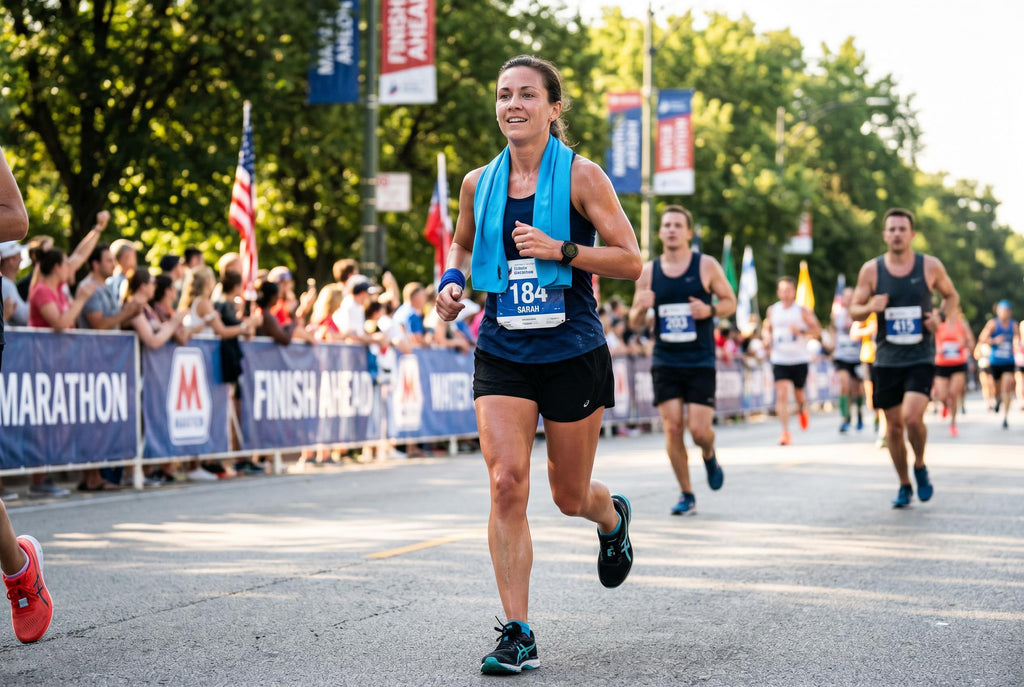
The best way to wear cooling towel while running outdoors is at your pulse points. Drape it around your neck for carotid artery cooling. Studies show this reduces perceived exertion by 18% and lowers heart rate by 8-12 bpm. For additional pulse point cooling, wrap smaller sections around your wrists.
Step 4: Re-wet at Aid Stations for Continuous Cooling
How long does a marathon chill wrap last during a half marathon or full? Most deliver 1-3 hours of active cooling hours depending on humidity. At each aid station, pour fresh water to re-wet reactivate towel performance instantly. This 5-second reset restores maximum evaporative power through the tough miles.
Step 5: Post-Race Recovery Cooling
Drape your activated towel over your neck and shoulders for 20-30 minutes post-race while you rehydrate. This reduces delayed-onset muscle soreness by improving blood flow and preventing the inflammatory spike after heat stress.
What Features Matter Most in a Marathon Cooling Towel
Does a runner's chill wrap work for marathon runners? Absolutely. Here's how key features stack up when selecting UPF 50 sun protection gear.
| Feature | Why It Matters | What to Look For |
|---|---|---|
| Material | Determines cooling efficiency | PVA microfiber blend |
| Cooling Duration | Fewer aid station stops | 2-3 hours per activation |
| UPF Rating | UV protection for your neck | UPF 50+ |
| Weight | Every ounce matters | Under 3 oz |
| Packability | Fits in running belt | Pocket-size when dry |
| Washability | Saves money long-term | Machine washable |
If you're looking for a reliable option, the Finvizo 4-Pack Cooling Towels deliver PVA microfiber material, UPF 50 protection, instant cooling up to 3 hours, and lightweight 2.4 oz each. Having four towels lets you stage fresh ones at your cooler, gear check, or with your crew.

Real Cooling Towel Scenarios for Runners
Here are four scenarios where hot weather running tips with a cooling towel make all the difference.
Summer Road Marathon: You're racing a June marathon with temperatures hitting 78°F. Activate your chill wrap at mile 8 and wear it through peak sun. For more strategies, see Outside Online's guide to running in hot weather.
Trail Ultramarathon: On exposed ridges past 85°F, re-wet your cooling wrap at stream crossings or drape it under your hat for evaporative cooling without breaking stride.
Weekday Training: On tempo runs over 90 minutes, an instant chill towel helps you maintain target paces in warm conditions. Check out REI's guide to cooling gear for outdoor athletes.
Post-Workout Recovery: After hard track sessions, drape your activated towel over your neck for 15 minutes while rehydrating. This lowers heart rate faster and reduces inflammatory response.

Marathon Cooling Towel FAQ
How long does a cooling towel last during a marathon?
Most PVA material chill wraps provide 1-3 hours of active cooling. In dry climates, expect 3 hours. In humidity above 70%, expect 1-1.5 hours. Re-wetting at aid stations restores full performance.
Where should I put a cooling towel when running?
The best placement is around your neck for carotid artery cooling. For more pulse point cooling, wrap sections around your wrists or tuck under your hat band.
Can a cooling towel actually lower my body temperature?
Yes. Studies show skin temperature reductions of 20-30°F below ambient. While it won't override natural heat production, it extends performance time by improving heat dissipation rate.
Is a cooling towel better than pouring water on my head?
Yes. Pouring water provides only momentary relief. A microfiber cooling fabric towel slows evaporation for prolonged cooling. UPF 50 towels also block UV rays.
How do I wash and care for my cooling towel?
Machine wash gentle with mild detergent. Avoid fabric softeners, which coat fibers and reduce performance. Air dry before storing.
Ready for Your Next Marathon?
Running 26.2 miles is hard enough without fighting the heat. A quality instant chill wrap gives you a proven advantage backed by sports science. If you're looking for reliable gear, the Finvizo 4-Pack Cooling Towels offer marathon-ready performance at 2.4 oz per towel.
Drop one in your gear check, keep one in your cooler, and stash a backup with your crew.
Related Guides: