Best Waterproof Hiking Backpacks for Wet Fall Trails
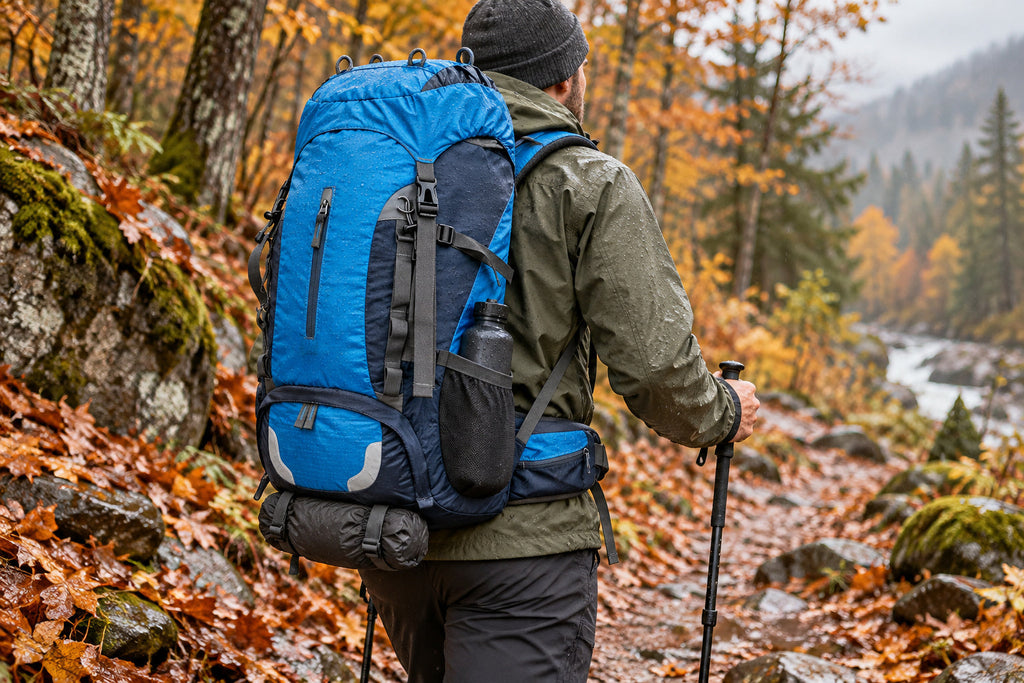
A waterproof hiking backpack should use layered protection; a waterproof hiking backpack alone cannot secure every seam and zipper. For wet fall trails, the Finvizo Hiking Backpack 55L Suspension is our high-capacity pick because it pairs an included rain cover with adjustable suspension, while dry bags protect sensitive gear inside.
What to Look for in a Rain-Ready Hiking Pack
Start by separating waterproof from water resistant. A truly waterproof pack needs a defined construction standard, sealed seams, and closures designed to stop water. Many hiking packs instead use coated fabric plus a rain cover. That combination handles ordinary rain better than bare fabric, but prolonged exposure, pooling water, and immersion can still reach the contents.
Use three layers for dependable protection. The outer pack carries comfortably and resists abrasion. A fitted cover sheds most falling rain. Inside, roll-top dry bags or heavy-duty waterproof liners isolate electronics, insulation, and sleep gear. This approach also preserves protection when you remove the cover to access a pocket.
Fit remains essential in rain. Wet ground demands balance, so choose an adjustable torso system, shaped shoulder straps, a supportive hip belt, and a sternum strap. Load dense items close to your spine and balance both sides. A rain proof backpack that sways or places weight on your shoulders alone can make slippery footing harder.
Capacity should match the trip, not ambition. A 55-liter pack supports bulky fall layers and many multi-day kits, but extra volume invites overpacking. The featured product lists a 50-pound load limit; that is a product ceiling, not a personal recommendation. Your conditioning, terrain, fit, and trip distance determine a sensible carried weight.
Inspect access points. Top lids shed rain better than wide-open panel zippers, but they can slow retrieval. Hip-belt pockets keep snacks accessible without removing the pack. External lash points help separate a wet shelter, yet loose equipment can snag. Pack every item deliberately before stepping onto a hiking pack rain test.
Top Picks and Waterproofing Comparison
| Protection system | Best for | Weak point | Extra step |
|---|---|---|---|
| Pack plus fitted rain cover | Long hikes and organized loads | Back panel and openings | Dry-bag critical gear |
| Seam-taped roll-top pack | Persistent rain and paddling crossover | Fewer quick-access pockets | Verify closure technique |
| Water-resistant daypack | Short, light showers | Seams and zippers | Add liner or cover |
A cover-equipped internal-frame pack is the most versatile choice for loaded fall hiking. A sealed roll-top prioritizes water exclusion but usually gives up pocket access and load organization. A light water resistant backpack works for forecasts with brief showers, provided you add a liner and keep essential insulation separately protected.

Our Pick: Finvizo Hiking Backpack 55L Suspension
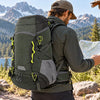
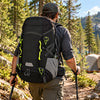
Our high-capacity pick is the Finvizo Hiking Backpack 55L Suspension. Its product page lists a 55-liter capacity, adjustable torso suspension, load-bearing hip belt, breathable back padding, and an included rain cover. Those features combine load management with practical rain defense instead of relying on fabric alone.
The listed empty weight is 3.37 pounds, with dimensions of 12.2 by 9.84 by 27.6 inches and a listed 50-pound maximum load. Those concrete figures help you compare volume and frame structure. They do not prove waterproofness or tell you how much weight your body should carry.
The Finvizo Hiking Backpack 55L Suspension is best understood as a rain-ready trekking pack, not a submersible dry bag. Use its cover before steady rain saturates the exterior. Put your phone, first-aid supplies, sleeping insulation, maps, and spare base layers in sealed inner bags even when the forecast looks manageable.

Rain-Cover Pack vs Waterproof Roll-Top
A rain-cover pack wins on carrying structure and organization. You get multiple access points, compression straps, gear loops, and an internal frame suited to heavier hiking loads. The trade-off is more possible entry points for water. Wind can also shift a loose cover, so fit and attachment matter.
A waterproof roll-top wins when keeping a simple load dry is the first priority. Correctly rolled closures and welded or sealed construction reduce openings. However, many models place all gear in one main chamber. You may need internal organization, and the design may not carry 55 liters as comfortably as an adjustable framed pack.
The safest choice depends on exposure. For ordinary wet fall trails, an internal-frame pack, fitted cover, and inner dry bags create useful redundancy. For stream crossings, packrafting, or conditions where immersion is possible, use equipment specifically rated for that environment. Never infer immersion protection from “water resistant” marketing language.
Who Should Buy What
Choose the 55L suspension pack
You should consider the Finvizo 55L pack for multi-day hiking, bulky cold-weather layers, or shared equipment. Measure your torso, adjust the suspension, and test the loaded pack at home. Keep the hip belt centered over your hip bones and recheck all straps after ten minutes of walking.
Choose a smaller covered pack
You should choose a 25-to-40-liter pack for day hikes or minimalist overnights. Lower volume can reduce accidental overpacking and make scrambling easier. Apply the same waterproofing system: cover outside, liner inside, and small sealed bags around items that cannot tolerate moisture.
Choose a sealed roll-top
You should choose a purpose-built waterproof roll-top when water exclusion matters more than pockets or fast access. Confirm the maker’s rating, seam construction, and closure instructions. Test the empty system safely at home, but never assume a hiking pack is a flotation device.

FAQ
Is the Finvizo 55L backpack fully waterproof?
The product includes a rain cover, but its own page warns that water resistance does not guarantee complete waterproofing. Use sealed inner bags for electronics, insulation, and other sensitive gear, and do not submerge the pack.
How do you keep a backpack dry in all-day rain?
Deploy the fitted cover early, close every pocket, and line the main compartment. Group critical gear in roll-top bags. Pack wet items separately, keep the cover tensioned, and inspect for pooling or shifted edges during breaks.
Is 55 liters too large for a day hike?
Usually, but not always. It can suit family gear, camera equipment, winter layers, or training loads. For a routine day hike, a smaller pack may carry closer to the body and discourage unnecessary weight.
How should you hike on muddy fall trails?
Stay on the established trail rather than widening it around mud, slow your pace, and use footwear suited to the surface. The Leave No Trace durable-surfaces guidance explains why concentrating travel protects surrounding vegetation.
Prepare Your Wet-Trail System
Review the measurements and suspension features of the Finvizo Hiking Backpack 55L Suspension, then add an inner liner and dry bags for true redundancy. Before departure, use the National Park Service Ten Essentials to check navigation, insulation, illumination, food, water, and emergency supplies.
Related reading
- FINVIZO Hiking Backpack Review
- What Situation Can I Use Hiking Backpack?
- Best Budget Travel Backpacks Under $100 (2026 Guide)

Written by Vivian J
Product Manager at Finvizo and an avid camper who tests gear on real trails. She writes from hands-on field experience to help you pick equipment that actually holds up outdoors.