Folding Wagon Accessories: Covers, Liners & Add-Ons
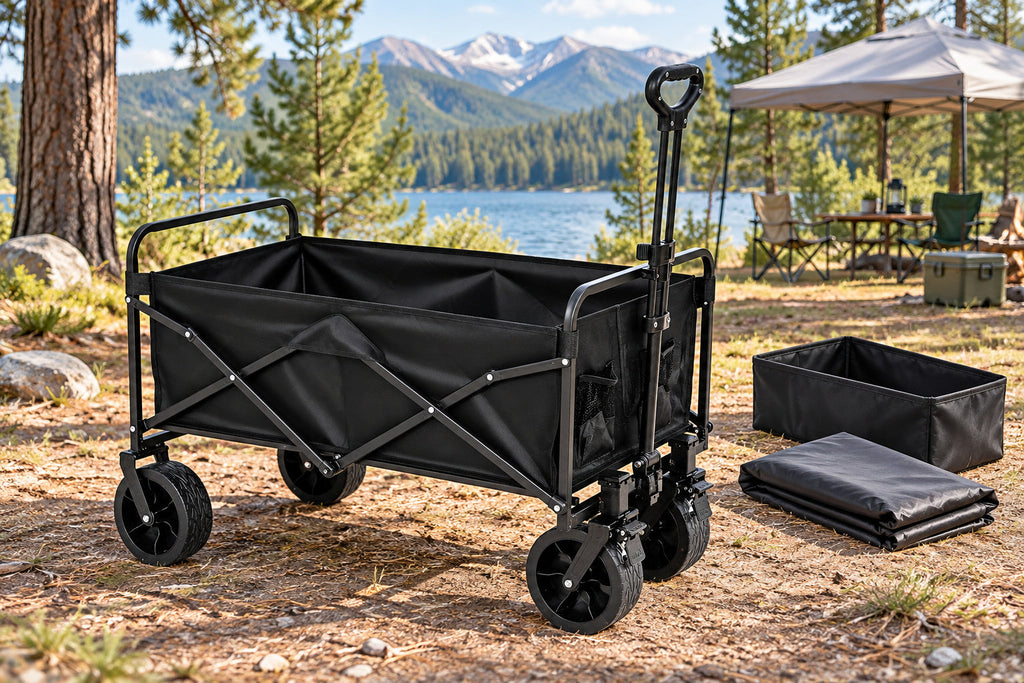
Wagon accessories add value only when wagon accessories solve one task without blocking folding joints, steering, wheels, latches, brakes, or drainage. Measure and document the fit before buying. The Finvizo 460lbs Big Wheels Wagon is the example platform here, not an accessory bundle or universal compatibility promise.
What Folding Wagon Accessories Do—and Which Problems They Solve
Covers for Storage, Rain, or Transport
A breathable storage cover, in-use cargo cover, and secured transport cover serve different purposes. Check closures, ventilation, seams, drainage, and wind retention. Water-resistant does not automatically mean waterproof, and a loose edge must never reach a wheel.
Liners for Cleanup and Small Cargo
A soft liner may contain soil and loose objects; a rigid insert may support a floor; a tray may contain spills. Each adds weight and can hide damage, hold moisture, or interfere with folding. Remove it regularly for inspection and drying.
Canopies for Shade
A canopy needs compatible supports, mount spacing, adequate clearance, removal instructions, and wind limits. Shade does not prove rain protection or a verified UPF rating. Elevated fabric can catch wind and alter stability.
Organizers and Holders
Side pockets and cup holders move mass away from the center. Check handle travel, wheel sweep, folded dimensions, and snag points with the organizer loaded. Never assume a clip that fits a frame tube is structurally approved.
The Finvizo 460lbs Big Wheels Wagon lists a 460-pound capacity and 150-liter bed. The official page also identifies a removable 600D Oxford-fabric pocket, adjustable handle, and widened swivel wheels with brakes. None of those facts certifies an add-on.
How to Choose and Fit Wagon Accessories
- Define the Accessory's One Main Job. Choose storage protection, weather coverage, cleanup, organization, shade, or mobility.
- Identify the Exact Wagon Model. Record the model, standard configuration, intended cargo, surfaces, and whether it will roll, park, fold, or travel with the accessory.
- Check Manufacturer Documentation. Review attachment points, prohibited changes, load rules, and warranty effects; ask when compatibility is undocumented.
- Measure the Bed, Frame, and Attachment Points. Measure the opening, depth, frame tubes, mounting spacing, seam locations, and handle geometry.
- Map Every Moving Clearance. Operate the handle, steering, wheels, latches, brakes, and folding joints to identify pinch, rub, and snag zones.
- Count Accessory Weight and Load Shift. Count the accessory and contents with cargo and keep dense items low and centered.
- Install Without Drilling or Structural Changes. Do not cut, weld, drill, or clamp over structural or moving parts unless explicitly authorized.
- Test Empty, Then Lightly Loaded. Test rolling, turning, folding, visibility, and fasteners on level ground, then reinspect after use.

Accessory Decision Table
| Add-on | Main benefit | Measure | Watch for |
|---|---|---|---|
| Cover | Dust or weather management | Working and folded form | Pooling, heat, snagging |
| Liner | Cleanup | Bed and joint clearance | Moisture, hidden damage |
| Canopy | Shade | Posts, height, spacing | Wind and tipping |
| Organizer | Quick access | Handle and wheel travel | Imbalance |
Create a measurement sheet with at least six entries: bed length, bed width, wall depth, frame-tube diameter, attachment spacing, and folded dimensions. Add photographs of latches, brakes, handle travel, and wheel sweep. This evidence is more useful than visual similarity.
Decide whether the item remains installed while rolling, comes off before folding, or serves only during storage. That decision changes every clearance requirement. Test the exact use state rather than the easiest installation state.
Repeat measurements with the fabric bed empty and with a representative light load because soft walls can change shape. Record values in inches and millimeters without rounding. If an accessory seller uses a different measurement method, ask for clarification instead of forcing the nearest advertised size.
Our Pick: Finvizo 460lbs Big Wheels Wagon
Our standard-platform pick is the Finvizo 460lbs Big Wheels Wagon. Its verified 150-liter bed and removable 600D Oxford pocket help organize normal cargo. Its adjustable handle and widened swivel wheels with brakes address maneuvering, while the listed maximum load is 460 pounds.
The covers, liners, canopies, organizers, seats, replacement wheels, and other add-ons discussed are not represented as included, sold by Finvizo, approved by Finvizo, warrantied, universally compatible, or safe for passengers. Confirm current contents and obtain model-specific documentation.

Tips and Best Practices
Count accessory weight and anything stored in it. Follow the lowest documented limit among the wagon, accessory, hardware, and operating conditions. A 460-pound wagon rating does not transfer to a canopy, hook, net, or organizer.
Use documented anchor points and keep straps clear of controls. The FMCSA cargo-securement rules provide general commercial context, not certification of this consumer wagon or its attachments.
Reinspect after the first short test. Look for shifted straps, loose clamps, stretched stitching, rubbed paint, trapped moisture, blocked drainage, altered steering, and folding interference. Remove an accessory immediately if it changes normal operation.
Common Mistakes to Avoid
Do not trust “universal,” drill a frame, cover warnings, block brakes, or route straps near wheels. Do not load a wet liner without checking drainage, and do not leave a canopy installed beyond its documented conditions.
Never assume a seat, belt, cushion, canopy, or liner converts cargo equipment into passenger transport. A CPSC utility-wagon recall illustrates passenger hazards; it neither concerns nor certifies Finvizo.

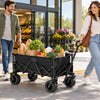
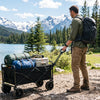
Everything on that checklist bolts onto the wagon itself, so the base specs matter: our Finvizo Foldable Wagon with Enlarged Wheels is rated to 460 lbs and runs $159.99 (was $179.99) in Black or Khaki — any accessory you add should be sized against that frame and wheel clearance, not guesswork.
FAQ
Are wagon accessories universal?
No. Verify model, dimensions, spacing, clearances, folding envelope, and manufacturer documentation. Visual similarity does not establish safe compatibility.
How do you measure for a wagon cover or liner?
Follow the accessory maker’s method and record opening, bed length, width, depth, tubes, seams, latches, drainage, spacing, and folded clearance.
Can any folding wagon use a canopy?
No. A canopy needs documented mounts, support spacing, clearance, removal directions, and wind limits. Shade does not prove rainproofing or UPF.
Do accessories affect wagon capacity and stability?
Yes. They add weight and may change balance, steering, wind exposure, and center of gravity. Keep dense cargo low and follow the lowest limit.
Can wagon accessories make a cargo wagon safe for children?
No. Add-ons do not convert cargo equipment into documented passenger transport. Carry people only in a product explicitly designed for that use.
Measure Before You Add
Define one job, measure, document, test, and reinspect. View the Finvizo 460lbs Big Wheels Wagon in standard form or compare Finvizo folding wagons.
Related reading
- Cheap vs Heavy Duty Wagon Cart : Is It Worth Paying More?
- Best Collapsible Wagons for Camping and Beach Trips
- How to Clean a Camping Wagon After the Beach: Full Guide

Written by Vivian J
Product Manager at Finvizo and an avid camper who tests gear on real trails. She writes from hands-on field experience to help you pick equipment that actually holds up outdoors.