Best Kids Hiking Backpacks: Fit & Sizes for Trails
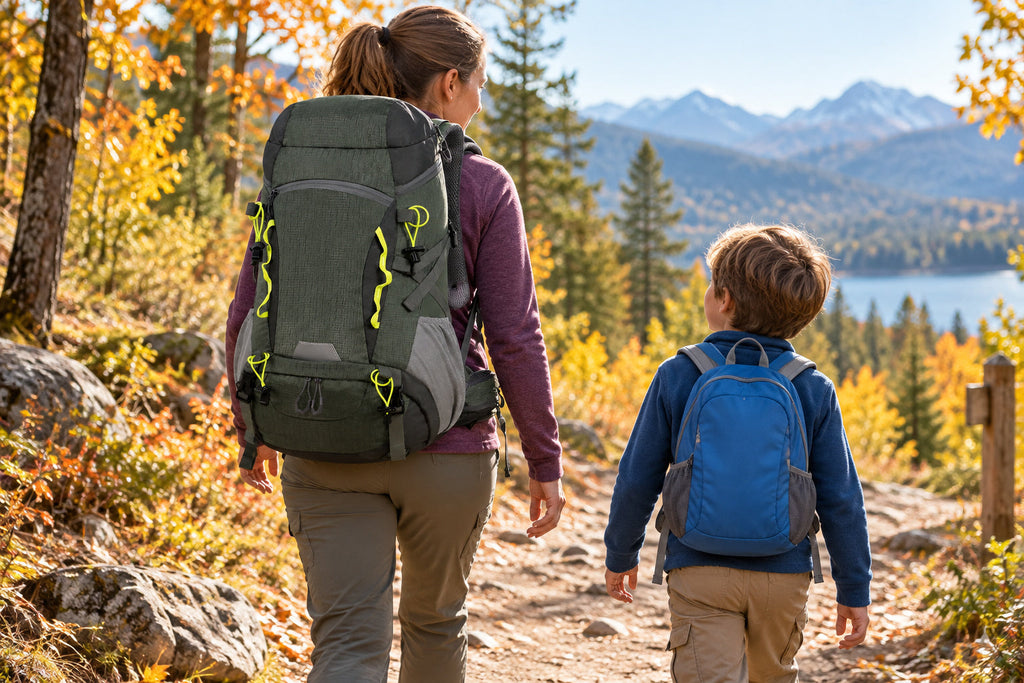
Kids hiking backpack fit matters more than maximum capacity: the best kids hiking backpack sits close, clears the neck, and carries only a child-sized share of the load. Choose by torso and comfort rather than age alone. Finvizo adult companion backpacks can carry bulky family gear while your child uses a properly fitted youth pack.
A small pack can make a child feel included, but a large hiking pack does not become child-safe just because its straps tighten. Finvizo does not currently list a dedicated children's backpack in this brief. The practical bridge is honest: give your child a suitable third-party youth pack and let an adult carry shared water, layers, food, and safety gear in a pack from the Finvizo backpack collection.
What to Look for in a Kids Hiking Pack
Start with torso fit, not the age label
Measure from the prominent bone at the base of the neck to the level of the top of the hip bones. Compare that number with the maker's published fit range. Children of the same age can have different torso lengths, so labels such as “ages 6–10” are only a screening tool.
The shoulder straps should wrap without cutting into the neck. A light hip belt should sit around the hip bones rather than the stomach. If the pack hangs below the hips, rocks from side to side, or forces the child to lean forward, try a smaller size.
Match capacity to a real trail plan
For a short nature walk, roughly 5–10 liters can hold a small water bottle, snack, compact layer, and personal item. Many school-age day hikers are comfortable with 10–18 liters when the fit is correct. Older youth may use 18–25 liters for longer days, but volume alone never proves suitability.
A toddler hiking backpack should remain especially simple and light. You should carry the family first-aid kit, extra food, water reserve, and emergency layers. Recheck the child after ten minutes because fatigue, red marks, or repeated strap pulling are better warning signs than a printed capacity.
Prioritize simple adjustments and visibility
Look for easily reached shoulder adjusters, a sternum strap that does not cross the throat, smooth zipper pulls, and a bright color or reflective detail. A whistle buckle can be useful only after you teach your child when and how to use it. Avoid dangling cords that can catch on branches.
Ventilated padding can improve comfort, but no back panel prevents sweating. Pack a dry layer when conditions warrant it. The National Park Service Ten Essentials gives you a sensible family checklist, while the adult should retain responsibility for critical navigation, illumination, shelter, and first-aid items.

Top Picks and Size Comparison
| Pack type | Useful starting volume | Best use | Adult carries |
|---|---|---|---|
| Toddler mini pack | About 3–7 L | Short, supervised walks | All essential and shared gear |
| Small kids hiking pack | About 5–12 L | Easy half-day trails | Safety kit, reserve water, bulky layers |
| Youth backpack | About 12–20 L | Longer day hikes | Shared shelter, food reserve, group gear |
| Adult companion pack | 45–55 L class | Family load support | Never assigned to a child |
These ranges are comparison points, not load prescriptions. Trail distance, elevation, weather, child development, and the pack's actual dimensions all matter. Start with less, observe how your child moves, and add only what the child can comfortably manage without changing posture.
Our Family Load Plan
Our approach: pair a correctly sized children's pack with an adult-carried Finvizo backpack. The adult collection offers hiking-oriented choices for shared layers and trail supplies, while the child keeps only a light personal load. This is a division-of-labor recommendation, not a claim that an adult Finvizo pack fits children.
Before leaving, put critical gear in the adult pack and duplicate only low-risk items in the youth backpack. Your child might carry one snack, a light insulating layer, and a small water bottle. You retain the map, first-aid kit, emergency shelter, headlamp, extra food, and backup water.

Toddler Hiking Backpack vs Youth Backpack
A toddler pack is primarily about participation. It should open simply, stay above the hips, and hold very little. A youth backpack can add structure, side bottle pockets, a sternum strap, and modest capacity. Neither should be treated as a scaled-down expedition pack unless its manufacturer specifically publishes a matching youth torso range.
A child who can walk farther does not automatically need a larger pack. Larger volume encourages overpacking and places weight farther from the back. Choose the smallest pack that holds the intended personal items, and keep dense objects close to the center of the back.
Who Should Buy What?
Choose a mini pack for early trail practice
If your toddler is joining a short loop, select a soft, compact pack with minimal hardware. Let the child carry a comfort item or snack, and keep the pack light enough that you can remove it immediately. Build positive trail habits before adding responsibility.
Choose a fitted youth pack for regular day hikes
If your school-age child hikes repeatedly, a purpose-built youth pack with a stated torso range is usually worth the upgrade. Test it with the exact layer the child will wear. Ask the child to walk, step up, reach overhead, and look left and right before you accept the fit.
Choose an adult companion pack for family logistics
If you manage food, weather layers, or supplies for several people, use a Finvizo adult companion backpack rather than increasing the child's load. You gain space for shared equipment while preserving the child's mobility. That makes the collection relevant to the family system without mislabeling any model as a youth product.
Follow the Leave No Trace Seven Principles: prepare for conditions, stay on durable surfaces, pack out waste, respect wildlife, and minimize your impact. Give your child one simple responsibility, such as keeping a snack wrapper until you reach a bin.

FAQ
What size kids hiking backpack should you choose?
Choose the maker's torso range that contains your child's measured torso length, then confirm the pack stays above the hips and clears the neck. Capacity comes second. A 5–12-liter range is a common starting point for easy child day hikes, but the right choice depends on fit, conditions, and the exact items carried.
How heavy should a child's hiking pack be?
There is no universal percentage that suits every child. Start with a very light personal load and watch posture, breathing, balance, and skin pressure. Reduce the load immediately if the child leans, complains, trips more often, or develops strap marks. Ask a pediatric professional for individual advice when health or mobility concerns exist.
Can a child wear a 50-liter adult hiking backpack?
You should not assume so. A 50-liter adult pack is typically designed around adult torso dimensions and shared or multi-day capacity. Tightened straps cannot correct an excessively long frame or misplaced hip belt. Use a genuine youth model for the child and assign the adult pack to an adult.
What should a child carry on a day hike?
A child can carry a small drink, snack, light layer, and simple personal item when fit and conditions allow. You should carry navigation, first aid, emergency shelter, illumination, reserve food and water, and any group-critical equipment. Adjust the split whenever terrain, heat, cold, or fatigue changes.
Build a Better Family Trail System
Fit your child's pack first, keep the load modest, and move shared gear to an adult. Explore the Finvizo backpack collection for adult companion options that support your family load plan, then select a separate youth pack with a verified child-sized torso range.
Related reading
- FINVIZO Hiking Backpack Review
- What Situation Can I Use Hiking Backpack?
- Best Budget Travel Backpacks Under $100 (2026 Guide)

Written by Vivian J
Product Manager at Finvizo and an avid camper who tests gear on real trails. She writes from hands-on field experience to help you pick equipment that actually holds up outdoors.