How to Wear a Sleep Mask So It Blocks All Light
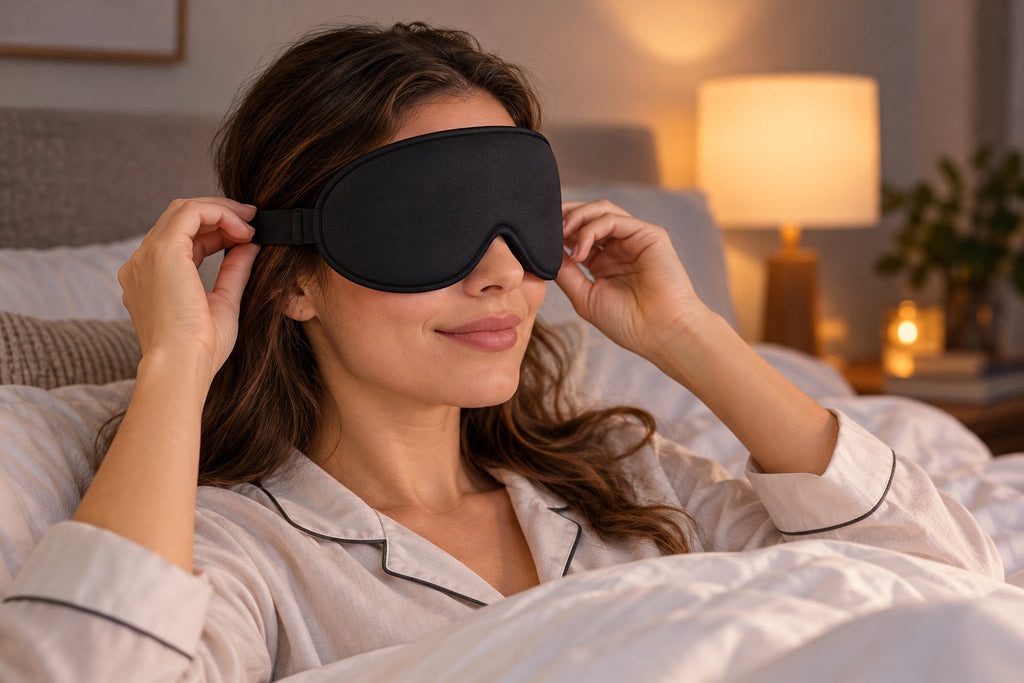
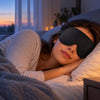
How to wear eye mask correctly starts with orientation; how to wear eye mask comfortably requires centered pockets, a seated nose area, and gentle tension. Keep the smooth surface outward and recessed pockets against your skin. The Finvizo 3D Contoured Sleep Eye Mask adjusts for fit, but cannot guarantee zero leakage for everyone.
What Correct Sleep Mask Position Means—and Why Leaks Happen
The mask’s two sides are not interchangeable. Its smooth exterior faces the room, while the recessed eye-pocket interior rests toward your skin. Reversing it removes the intended eyelid clearance and does not solve leakage.
Center each recess over a closed eye. If the cup sits high, low, or sideways, its rim may touch lashes or open a temple gap. Cup alignment should be corrected before strap tension.
The nose section controls the lowest gap. Slide the mask slightly up or down until it sits comfortably without pinching or affecting breathing. A high strap angle can pull this edge upward.
The Finvizo 3D Contoured Sleep Eye Mask uses contoured memory foam with smooth outer fabric, deep 3D pockets, an adjustable elastic strap, and a shaped nose section. These offer adjustment options, not an all-face seal guarantee.
The NHLBI healthy sleep habits include a dark, quiet, cool room and consistent schedule. A mask manages light; it is not a treatment for sleep disorders.
Light-Leak Comparison
| Problem | Likely cause | First correction | Avoid |
|---|---|---|---|
| Nose leak | Too high or low | Reseat nose | Overtightening |
| Temple leak | Cups off-center | Recenter pockets | Twisting |
| Lash contact | Pockets misaligned | Reset both axes | Smooth side inward |
| Upward slip | Strap too high | Lower strap | Extra tension |
| Ear discomfort | Folded strap | Flatten route | Ignoring pain |
How to Wear an Eye Mask Correctly
- Find the Outside and Inside. Point the smooth panel outward and recessed eye pockets inward toward your skin.
- Inspect the Mask and Loosen the Strap. Start clean, undamaged, and loose enough to position without dragging over your eyes.
- Close Your Eyes and Center the Pockets. Place each recess over its eye with raised edges around rather than on eyelids.
- Seat the Shaped Nose Area. Adjust slightly up or down to reduce the lower gap without pinching or obstructing breathing.
- Lay the Strap Low and Level. Keep it flat behind your head and clear of folded ears so it does not pull upward.
- Add Only Stabilizing Tension. Stop once stable; loosen or remove it for pain, numbness, headache, eye pressure, or irritation.
- Perform the 30-Second Position Check. With eyes closed in a lit room, turn your head and lie as usual, correcting placement first.
- Remove and Refit Instead of Reversing It. If it shifts, restart with smooth side out and pockets in; never flip it.
The 30-second sequence is an editorial fit exercise, not a scientific performance test. Repeat it after several minutes because hair, foam, and pillow contact may settle. Identify which edge moved before adjusting only that component.

Tips and Best Practices for Better Light Control
Reposition before tightening. Small vertical changes often reduce a nose gap more comfortably than extra tension. If both lower corners leak, shift the whole mask rather than pulling one side.
Test in your normal sleep position. Side-pillow contact can move an edge, so adjust while lying down. Move hair away from the perimeter and strap without creating painful pulling. Repeat the fit check after five minutes because normal movement can reveal a gap that was not obvious initially. Check again after changing pillows, since a different loft can press the mask edge at another angle.
Reduce room light with curtains and safely covered indicators. This lowers the amount of light the mask must manage and avoids chasing a painful seal that your anatomy cannot support.
Follow verified hand-wash and air-dry care. The American Academy of Ophthalmology sleep-mask guidance provides general safety context. Stop using it for persistent pressure, pain, or irritation.
Our Pick for Contoured Eye Clearance
Our adjustable contoured pick is the Finvizo 3D Contoured Sleep Eye Mask. Deep 3D pockets are designed to reduce eyelid and lash contact, while the adjustable elastic strap and shaped nose section let you refine stability. The smooth exterior faces outward; the recessed eye-pocket interior rests toward your skin.
The product page’s “100% light-blocking” language is a listing claim, not an independent measurement or promise for every face. Do not describe the mask as zero-pressure. It uses memory foam and smooth fabric, not silk, gel, electronics, or medical technology.

Common Sleep Mask Mistakes to Avoid
Do not wear the smooth exterior against your eyes. Do not tighten before centering the pockets and nose area, angle the strap upward, fold an ear, or drag the mask across open eyes.
Do not ignore discomfort. Remove and inspect the mask for eye pressure, skin irritation, ear pain, numbness, or headache. A sleep mask controls light and does not treat insomnia or guarantee melatonin, REM, or sleep-quality changes.
Do not chase an absolute seal with painful pressure. Facial geometry, nose bridge, head size, hair, pillow contact, and overnight movement vary. A comfortable fit plus room darkening is a more realistic system.

If you want to practice the fit steps above, our Finvizo 3D Contoured Sleep Eye Mask is the reference example used throughout this guide: $14.98 in four colors, with molded eye pockets, a smooth outer face, and an adjustable strap — one mask per package.
FAQ
Which side of a 3D eye mask faces your skin?
The recessed pocket interior faces your skin and the smooth exterior faces outward. Center the recesses and never reverse the mask to fix a gap.
How tight should a sleep mask be?
Use only enough tension for stability. Reposition pockets and nose first, and loosen or remove it for pain, pressure, numbness, headache, or irritation.
Why does light leak around the nose?
The mask may sit too high or low, pockets may be off-center, or an angled strap may lift the edge. Correct placement before tension.
How should a side sleeper position an eye mask?
Fit it in your normal side position. Keep pockets centered, nose seated, strap low and level, hair clear, and check pillow contact.
Can every face shape get a completely dark seal?
No. A universal zero-leak result cannot be promised because facial geometry, head size, alignment, hair, pillow contact, and movement vary.
Orient, Center, and Adjust—Then Rest
Keep smooth side out, pockets in, eyes centered, nose seated, and strap level. Explore the Finvizo 3D Contoured Sleep Eye Mask while maintaining realistic fit expectations.
Related reading
- 3D Sleep Mask vs Flat Mask: Pressure Test & Complete Buyer's Guide
- Essential Guide for Spring Outings
- Best Sleep Masks for Lash Extensions: No-Contact Picks That Actually Work

Written by Vivian J
Product Manager at Finvizo and an avid camper who tests gear on real trails. She writes from hands-on field experience to help you pick equipment that actually holds up outdoors.