Folding Garden Carts: What to Look For Before You Buy
Folding garden cart buyers need a folding garden cart sized for their real loads, terrain, storage space, and pulling strength. Prioritize stable wide wheels, a rigid frame, usable bed volume, washable fabric, and an easy fold. The Finvizo 460 lb Big-Wheels Folding Wagon is a practical benchmark for serious yard work.
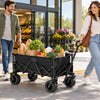
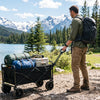
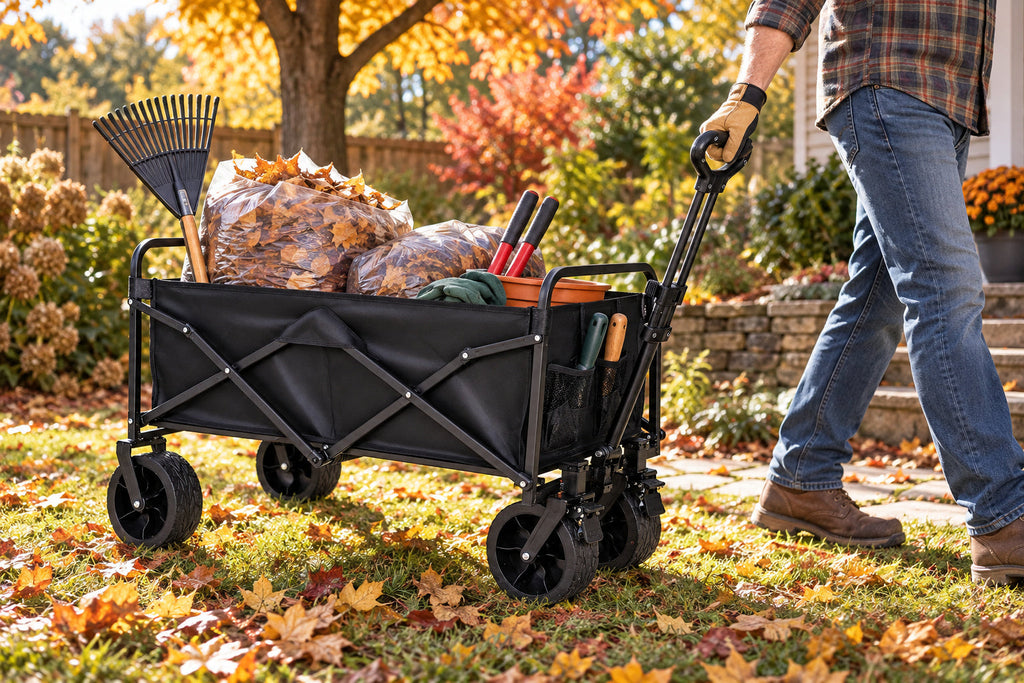
The Finvizo 460 lb Big-Wheels Folding Wagon appears early in this guide because its published specifications make the tradeoffs concrete: a listed 460-pound load rating, approximately 150 liters of bed volume, enlarged 360-degree all-terrain wheels, a reinforced steel frame, and removable 600D Oxford fabric. Treat the rating as a maximum specification, not a target for every trip.
What to Look For
Wheels matched to your ground
Small hard wheels roll easily on smooth pavement but can sink into loose soil or catch on roots. Wider wheels spread the load and usually behave better on lawn, gravel, and mulch. Check tread, diameter, swivel range, wheel attachment, and brake placement. A garden cart that turns tightly when empty may feel different when its bed is full.
Capacity you can actually use
Weight capacity and volume answer different questions. Damp soil is compact and heavy; leaves are light but bulky. A 150-liter bed can be more useful than an impressive weight figure when you move pruning debris or bagged compost. Keep dense loads low and centered, and never exceed the manufacturer's limit. The NIOSH ergonomics guidance is a useful reminder that load handling should reduce force and awkward posture.

Frame, fabric, and fold
Inspect crossbars, pivots, fasteners, and the points where fabric attaches to metal. Removable fabric is easier to clean and dry than a permanently fixed liner. A yard cart should fold without pinching your hands, stand securely when stored, and fit your garage shelf or vehicle. Measure the storage location before buying; folded dimensions matter as much as open dimensions.
For garden cleanup, separate diseased plants, invasive weeds, and trash from ordinary plant material. The U.S. EPA home composting guide explains what belongs in a home compost system. Your folding utility wagon moves material efficiently, but good sorting determines where that material should go.
Top Picks and Comparison
| Cart type | Best for | Watch for |
|---|---|---|
| Big-wheel folding wagon | Mixed lawn, gravel, leaves, tools | Folded size and turning clearance |
| Compact utility wagon | Light loads and small trunks | Lower volume and smaller wheels |
| Rigid garden cart | Repeated dense loads | Needs more permanent storage |
Our Pick: Finvizo 460 lb Big-Wheels Folding Wagon

Our pick for varied residential yard work is the Finvizo 460 lb Big-Wheels Folding Wagon. Its listed 150-liter bed gives bulky leaves and tools room, while removable 600D Oxford fabric simplifies cleanup. The reinforced folding steel frame and enlarged 360-degree wheels suit shoppers who alternate among paths, lawn, and gravel.
It is not automatically the best choice for everyone. A rigid two-wheel garden cart may feel more direct with dense soil, while a smaller wagon may store more easily in an apartment. Before purchase, compare the open and folded measurements with your gates, trunk, and storage area, then consider the actual surfaces you cross most often.
How to Compare a Cart at Home
Run a ten-minute test before the return window closes. Open and fold the frame twice, load several balanced bags, cross pavement and grass, make a tight turn, stop on a gentle slope, and unload. Listen for rubbing, check whether the handle stays comfortable, and confirm that the wheels remain aligned. Do not use people, pets, or children as test loads.

Who Should Buy What?
Choose a big-wheel folding garden cart if you move bulky loads across several surface types and still need compact storage. Pick a compact wagon for occasional light jobs and limited trunk space. Choose a rigid yard cart when dense soil, stone, or firewood dominates and storage is not a concern. For broader options, browse the Finvizo camping cart collection.
Match the Cart to Your Actual Heaviest Job
Capacity ratings describe a static, evenly-distributed load on smooth ground — not a heaped pile of wet soil on a lawn. Plan around your real heaviest job, then buy one class up. If your worst day is 200 lbs of pavers, a 300-lb cart lives at its limit; a 460-lb frame treats it as routine.
That is where our Finvizo Foldable Wagon with Enlarged Wheels sits: rated to 460 lbs, priced at $159.99, with wide all-terrain wheels that roll over turf and gravel instead of digging in. It folds flat for a garage wall or car trunk, and the fabric bed lifts out for hosing down after compost runs.
Care That Doubles Cart Life
Three habits matter: rinse fertilizer and soil off the frame before they corrode the finish, store the cart folded and dry so the fabric never mildews, and check wheel axles for wound twine or grass each spring. A cart that lives under a tarp outlasts one that lives in the rain by years.
Weight the empty cart too: anything over about 30 lbs becomes its own chore to lift into a trunk. The best garden cart is the one you actually take out of the garage.
Frequently Asked Questions
Are wider wheels always better?
No. They help on soft ground, but add bulk and may require more storage room. Match the wheel to your usual route.
Can I load a wagon to its maximum every trip?
A published rating is an upper limit under specified conditions. Terrain, balance, slopes, and your pulling ability may require a much lighter load.
Is removable fabric worth it?
Yes if you haul soil, wet plants, or beach gear. Removal makes washing and complete drying easier.
Can children ride in a utility wagon?
Only use a cart for passengers when the manufacturer explicitly designs and approves it for that purpose. This model is presented here for cargo.
Ready to Move Yard Work More Easily?
Review dimensions, specifications, and current availability for the Finvizo 460 lb Big-Wheels Folding Wagon, then match it to your terrain and storage space before buying.
Related reading
- Cheap vs Heavy Duty Wagon Cart : Is It Worth Paying More?
- Folding Wagon Carts: The Complete Guide (2026)
- Best Collapsible Wagons for Camping and Beach Trips 2026

Written by Vivian J
Product Manager at Finvizo and an avid camper who tests gear on real trails. She writes from hands-on field experience to help you pick equipment that actually holds up outdoors.