Hiking on a Budget: Gear That Earns Its Price
Hiking on a Budget: Gear That Earns Its Price
Hiking on a budget means buying a small set of durable, versatile gear and using it for years. Spend where a failure hurts you — footwear, rain protection, your pack — and save everywhere else. One good 45L pack, worn across all four seasons, beats three cheap ones.
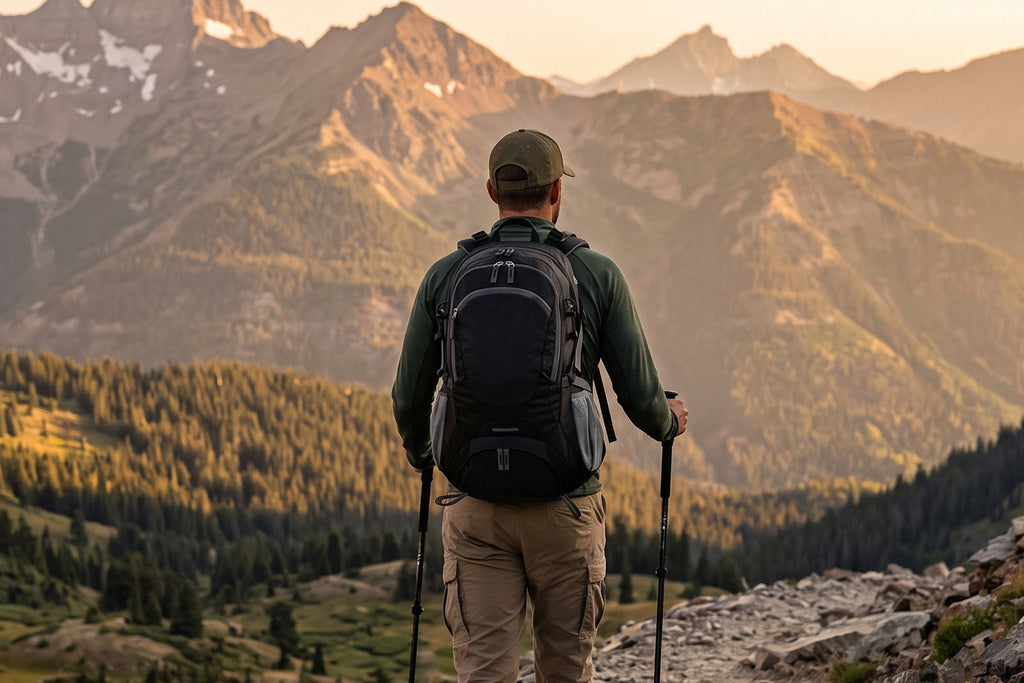
Picture a late-autumn trailhead: frost on the gravel, and the same pack on your shoulders that carried you through wildflower season in spring. That's the 45L Hiking Backpack Airflow — not new, not flashy, still working. That's hiking on a budget: gear chosen once, chosen well, trusted through every season.
The Budget Hiking Mindset: Value, Not the Lowest Price Tag
Cheap hiking gear and budget hiking gear are not the same thing. Think in cost-per-use: how many trips will this survive? Spend where failure hurts — your feet, your back, your weather protection — because those failures end trips. Save where failure is harmless: water bottles, fleece, snacks. The goal isn't the lowest price tag; it's the lowest cost per mile.
The Budget Hiking Gear List
Footwear — Spend
Trail runners or mid hiking boots both work — fit and grip matter far more than brand or the trail shoes vs hiking boots debate. Try shoes on late in the day when your feet are swollen, and buy last season's model on sale. Blisters end more trips than bad weather does — this is where money earns its keep.
Layers — Save
A moisture-wicking base layer, one insulating mid-layer like fleece, and whatever shell you already own will cover most conditions. Just skip cotton — it holds sweat and chills you fast. Shop off-season gear deals and second-hand outdoor gear racks; layers are low-risk, low-cost items.
The Pack — One Pack for All Seasons
Your pack is the piece everything else hangs on, and 45L is the sweet spot. It covers a day hike with extra layers and the ten essentials, a summer overnight with a compact shelter, and a winter day trip with bulky clothing. One 45L pack replaces the two or three specialized packs a bigger kit would demand — exactly the math a budget hiker loves.

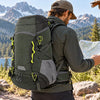
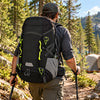
Our pick for a budget core buy: the 45L Hiking Backpack Airflow. At just 2.87 lb with a listed 44 lb load limit, it carries weekend loads without weighing you down, and the suspended airflow frame keeps your back ventilated on summer climbs. A rain cover is included, and a hydration/laptop sleeve plus external attachment points cover the rest. One honesty note: a rain cover is not a fully waterproof pack — use dry bags inside for electronics and anything that must stay dry.

Water & Food — Save
A reusable bottle or a basic hydration bladder does the job — water doesn't care what it rides in. For food, store-brand trail mix, dried fruit, and instant oats fuel you as well as premium labels.
Navigation & Safety — Mostly Save
Free map apps with downloaded offline maps handle most navigation, and a cheap whistle and headlamp cover signaling and light. Round out the ten essentials and review the National Park Service hiking safety guidance before your first solo trip.
Where to Save vs. Where to Spend
Use this table to sort affordable hiking gear from false economy.
| Gear item | Save or spend | Why | Budget move |
|---|---|---|---|
| Footwear | Spend | Blisters end trips | Last year's trail-runner model |
| Backpack | Spend | Carries everything, every season | One durable 45L pack — 2.87 lb, 44 lb load limit, airflow back panel, rain cover included |
| Insulating layers | Save | Low failure risk | Fleece on sale or second-hand |
| Water storage | Save | A bottle is a bottle | Reuse what you own |
| Navigation | Save | Free apps work | Offline maps + whistle |
The "spend" column is short on purpose: everything on it touches your body or your safety.
How to Build a Budget Hiking Kit (Step by Step)
- Set a total budget and rank every item by how much a failure would hurt you on the trail.
- Spend first on the load-bearing three: footwear, rain protection, and your backpack.
- Choose one durable 45L pack as your core buy so it covers day hikes and weekend trips in every season.
- Fill the gaps — layers, water, kitchen, navigation — with sale, outlet, or second-hand items.
- Test the full kit on short day hikes close to home before committing to longer trips.
For step five, the American Hiking Society offers trail wisdom and help finding trails near home, so shakedown hikes cost nothing but a Saturday.

One example of spending where it counts: the Finvizo 45L Hiking Backpack with Airflow Frame costs $149.99 (was $169) — not the cheapest 45-liter pack around, but the ventilated frame and laptop-compatible sleeve mean one Finvizo hiking backpack covers trail days and travel days alike.
FAQ: Hiking on a Budget
Is cheap hiking gear worth buying? For low-risk items like water bottles, fleece layers, and trekking snacks, yes. For anything whose failure strands or hurts you — footwear, rain protection, and your pack — cheap usually costs more in replacements. Buy value, not the lowest price.
What hiking gear should I never skimp on? Three things: footwear that fits, dependable rain protection, and a backpack with a comfortable carry and enough capacity. Everything else can be budget, borrowed, or second-hand.
Is a 45L backpack big enough for hiking? For most hikers, yes. A 45L pack covers day hikes with extra layers, summer overnight trips, and winter day trips with bulky clothing — one pack for all seasons, which is exactly what a budget kit needs.
How can I find affordable hiking gear that lasts? Shop off-season sales, last year's models, and reputable second-hand gear. Prioritize durable materials and simple designs with fewer parts to break, and check listed specs like pack weight and load limit before buying.
The Bottom Line
Hiking on a budget isn't about owning less — it's about owning once. Spend where failure hurts, save where it doesn't, and let one kit carry you through four seasons. Start with the piece everything else hangs on: check out the 45L Hiking Backpack Airflow, or browse the full hiking gear collection.
Related reading
- FINVIZO Hiking Backpack Review
- What Situation Can I Use Hiking Backpack?
- Best Budget Travel Backpacks Under $100 (2026 Guide)

Written by Vivian J
Product Manager at Finvizo and an avid camper who tests gear on real trails. She writes from hands-on field experience to help you pick equipment that actually holds up outdoors.