
How to Pronounce Balaclava (And Where It Came From)
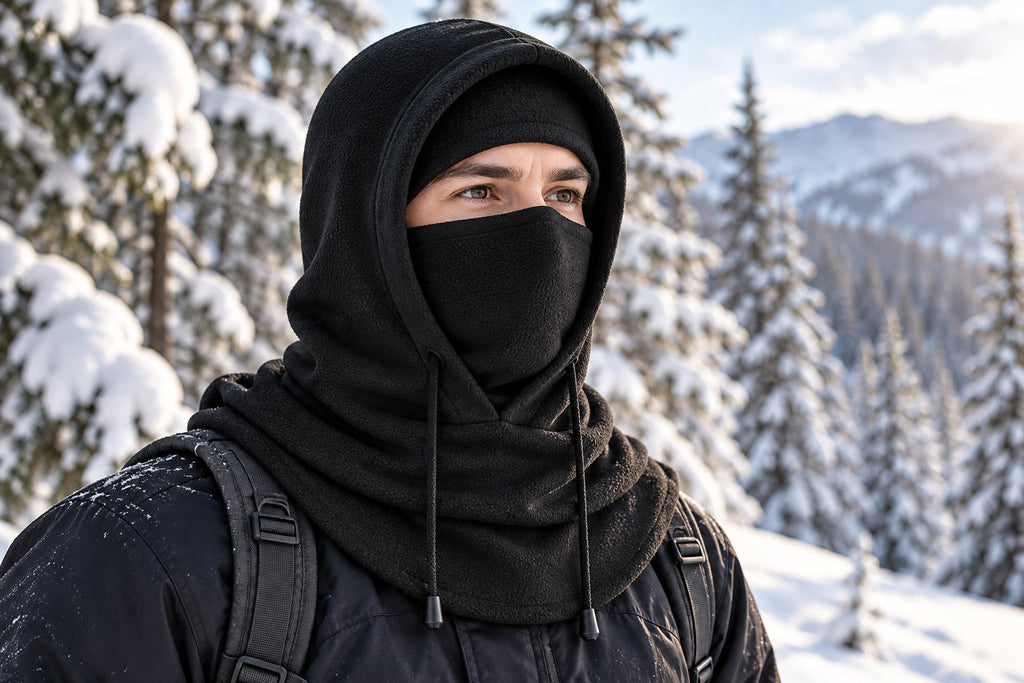
How do you pronounce balaclava? How do you pronounce balaclava commonly in English? Use /ˌbæl.əˈklɑː.və/, or bal-uh-KLAH-vuh, with strongest stress on syllable three. Accents and dictionaries vary. The Finvizo Fleece Balaclava Ski Mask is a modern garment example, not evidence for pronunciation or history.
What “Balaclava” Means—and Why Pronunciation Varies
A balaclava is a covering for parts of your head, face, and neck. Openings, coverage, materials, and intended use vary by design. The word defines a garment category; it does not promise warmth, wind resistance, breathability, protection, or compatibility for every item carrying the name.
The supplied common pronunciation has four syllables: bal | uh | KLAH | vuh. The third syllable carries primary stress, while the first may carry lighter secondary stress. That makes rhythm more important than trying to force every written vowel into an equally strong sound.
The Cambridge Dictionary pronunciation page provides accent-labeled recordings and the transcription /ˌbæl.əˈklɑː.və/. Listen to the label you want to practice. American, British, and other English accents can realize vowels differently, and another reputable dictionary may transcribe those differences differently.
| Feature | Common guide | What may vary |
|---|---|---|
| IPA | /ˌbæl.əˈklɑː.və/ | Accent transcription |
| Syllables | Four | Reduced vowels in fast speech |
| Main stress | Third: KLAH | Strength of secondary stress |
| Practice cue | bal-uh-KLAH-vuh | Exact vowel quality |
How to Pronounce Balaclava Step by Step
- Listen to an Accent-Labeled Dictionary Recording. Choose a US or UK recording and keep that model consistent while practicing.
- Split the Word Into Four Beats. Say bal | uh | KLAH | vuh slowly without adding consonants.
- Say the First Syllable Lightly. Let bal support the rhythm instead of making it the main stress.
- Reduce the Second Syllable. Keep uh short and unstressed rather than emphasizing every syllable equally.
- Stress the Third Syllable. Make KLAH the clearest, strongest beat in your practice model.
- Finish With a Light Final Syllable. Keep vuh brief without shifting the main stress to the end.
- Blend the Word at Normal Speed. Join the beats as bal-uh-KLAH-vuh while preserving third-syllable stress.
- Check Yourself Against the Same Recording. Record yourself and compare stress and rhythm, not accent identity.
Practice the four beats three times slowly, then three times conversationally. Use the word in a sentence, such as “You packed a balaclava.” If the rhythm collapses, return to the four beats. Your goal is intelligibility and a consistent model, not erasing your accent.
You can also make a short comparison recording: say the dictionary model, pause, then say your attempt. Listen first for four beats and the strongest third beat. Only after rhythm matches should you examine smaller vowel differences. This order keeps practice focused and prevents spelling from overpowering what you actually hear.

Tips for Remembering the Pronunciation
Mark the strongest beat in capitals before increasing speed: bal-uh-KLAH-vuh. Tap four times and make tap three firmer. Avoid spelling each vowel too strongly; English commonly reduces unstressed syllables. Recheck named audio instead of trusting a phonetic cue alone.
Do not label every alternative wrong. A speaker may use a different vowel while retaining recognizable stress and rhythm. When accuracy matters, name the dictionary and accent model you followed. IPA is more precise than an English respelling, but audio supplies details neither cue captures perfectly.
If you encounter another transcription, compare its accent label, stress marks, and audio before deciding that it conflicts. Dictionaries may use different notation conventions. A difference on the page can represent a predictable regional vowel rather than a different word, so cite the source you used.
Where the Word Came From
Balaklava is a place name in Crimea. The National Army Museum account of the Battle of Balaklava places the battle in the Crimean War on 25 October 1854. The spelling “Balaklava” often appears for the place and battle, while “balaclava” names the garment in English.
The garment name is conventionally connected with cold-weather knitted coverings associated with British troops during the Crimean War. That history does not establish one inventor, one first pattern, or the features of modern products. Treat the place, battle, and garment association as etymological context rather than a performance claim.
Our Pick: Finvizo Fleece Balaclava Ski Mask
Our modern example is the Finvizo Fleece Balaclava Ski Mask. Its current page describes thick polar fleece, adjustable drawstrings, and extended neck coverage. Those are listing facts about this present-day design; its name and the 1854 history do not independently prove warmth, windproofing, breathability, or safety performance.
The Finvizo Fleece Balaclava Ski Mask helps you connect the vocabulary to a current object, but do not generalize its construction to all balaclavas. Check the live listing and fit for your intended activity. A pronunciation lesson cannot determine material suitability, helmet compatibility, visibility, or safe use.

Common Pronunciation and History Mistakes
Avoid stressing all four syllables equally, moving the strongest beat to the end, or inserting sounds not present in your chosen recording. Do not claim one accent is globally exclusive. Plain-English respellings are approximations, so pair bal-uh-KLAH-vuh with labeled audio and IPA.
Do not turn an appealing origin story into unsupported certainty. The documented battle occurred in 1854, but that does not prove an exact first garment or inventor. Most importantly, never use etymology to claim a modern mask has tested insulation, protection, or certification.

However you say it, the garment itself is simple to spec: our Finvizo Winter Fleece Balaclava Ski Mask is a one-size windproof hood at $17.99, in seven colorways from Black to Purple — the word may tie tongues, but the sizing will not.
FAQ
How do you pronounce balaclava in American English?
One common guide is bal-uh-KLAH-vuh, approximately /ˌbæl.əˈklɑː.və/, with KLAH strongest. Use accent-labeled audio because vowel quality varies.
Which syllable is stressed in balaclava?
In the common four-syllable analysis, primary stress falls on syllable three. The first can have secondary stress; syllables two and four remain lighter.
Are there different accepted pronunciations of balaclava?
Yes. American, British, and other accents may realize vowels differently. Follow a named dictionary model without declaring every documented alternative wrong.
What does balaclava mean?
It means a head, face, and neck covering whose openings, coverage, and materials vary. The word alone establishes no particular product performance.
Did the word balaclava come from the Crimean War?
The garment name is conventionally associated with Balaklava in Crimea and the 1854 battle. That association does not establish one inventor or exact first design.
Say the Word, Then Check the Modern Design
Remember four beats and strongest stress on beat three, then verify with accent-labeled audio. If you want a current garment example, review the live Finvizo Fleece Balaclava Ski Mask listing and evaluate its documented design separately from its name.
Related reading
- Balaclava vs Ski Mask vs Neck Gaiter: Winter Face Cover Guide
- Neck Gaiter vs Balaclava vs Arm Sleeves: Which Do You Need?
- What Is a Balaclava? Uses, Fit & How to Wear

Written by Vivian J
Product Manager at Finvizo and an avid camper who tests gear on real trails. She writes from hands-on field experience to help you pick equipment that actually holds up outdoors.




)