
Internal Frame vs External Frame Backpack: Compared (2026 Guide)
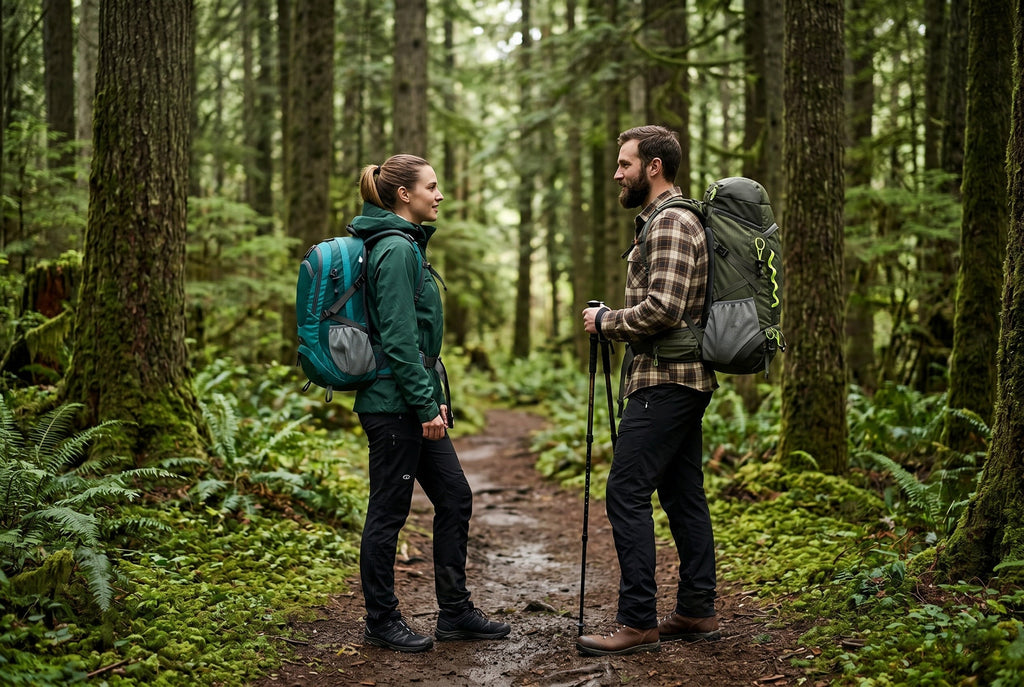
You're staring at two very different packs in the gear aisle. One is sleek and body-hugging; the other has a visible metal frame with gear strapped all over it. Choosing between an internal vs external frame backpack is one of the most important gear decisions you'll make. This guide compares internal vs external frame backpack designs across the dimensions that matter on the trail.
Quick Comparison Table
Here's the side-by-side breakdown at a glance.
| Feature | Internal Frame | External Frame |
| Weight | 3-5 lbs | 5-8 lbs |
| Load Capacity | Up to 50-60 lbs | 50-80+ lbs |
| Weight Distribution | Close to body, centered | High and away from body |
| Mobility | Excellent (narrow profile) | Limited (wide, catches brush) |
| Ventilation | Moderate to good | Excellent (air flows fully) |
| Terrain Fit | All terrain, technical trails | Smooth trails, open country |
| Best For | Most hikers, 90% of trails | Hunting, heavy loads, scouts |
| Typical Capacity | 40-65L | 60-100L+ |
| Price Range | $80-$350 | $100-$400 |
If you're shopping for a best hiking backpack 50L, you're likely looking at internal frame models.

What Is an Internal Frame Backpack?
An internal frame backpack houses its support structure — aluminum stays and a plastic framesheet — inside the pack body, hugging your spine. This keeps the load close to your center of gravity for a stable carry. Modern internal vs external frame backpack comparisons favor internals — they suit 90% of hiking scenarios. REI's guide to backpack frame types offers excellent breakdowns.
What Is an External Frame Backpack?
An external frame backpack features a rigid, visible frame — typically tubular aluminum — with the pack bag attached from the outside. The frame extends above and below the pack body. The load sits elevated and away from your back, creating a natural air gap. External frames excel at carrying 60-80+ pounds. However, the wide profile catches branches on narrow trails. In internal vs external frame backpack comparisons, externals are a niche choice.
Weight Distribution and Load Carrying
Internal frame backpacks keep the load close to your spine, aligning with your center of gravity. Most handle 50-60 lbs comfortably. External frames position the load higher and farther out, making balance harder but transferring heavy loads efficiently. The verdict: internals win under 50 lbs; externals hold an edge above 60 lbs.
Mobility and Maneuverability on Trails
Internal frame packs offer a narrow 11-14 inch profile that slips through dense forest. The pack moves with your torso. External frames present a wide, rigid silhouette that grabs branches and rocks. On technical terrain, externals become a liability. For mobility, internal vs external frame backpack comparisons favor internals decisively.
Ventilation and Back Comfort
Traditional internal frames pressed against your back, creating a sweat-soaked mess. Modern designs use trampoline-style mesh with a 1-2 inch air gap, reducing back sweat by up to 40%. External frames have always provided excellent ventilation — the natural air gap is their advantage. The Finvizo 50L Lightweight Hiking Backpack delivers external-frame airflow in an internal-frame design. See our ventilated hiking backpack buyer's guide.

Storage Access and Organization
Internal frame packs offer organized storage: top-loading main compartment, sleeping bag compartment, zippers, and hip belt pockets. External frames keep things simpler — one large space with gear strapped to the frame. This works for oversized items but offers poor weather protection. For organization, internal vs external frame backpack choices favor internals.
Durability and Terrain Adaptability
Internal frames protect stays inside the pack body, lasting 5-10 years. External frames expose tubes to dents but are user-repairable in the field. In this internal vs external frame backpack category, call it a tie: internal for protected durability, external for field repairability.

Which One Should You Choose?
Most hikers should choose an internal frame. You carry 25-50 lbs on 1-5 day trips on technical trails. External frames only make sense for 60-80+ lb loads on wide, open trails. When comparing internal vs external frame backpack options, internals win for 90% of hikers. The Finvizo 50L Lightweight Hiking Backpack delivers a lightweight internal frame, ventilated back panel, and adjustable suspension.
Frequently Asked Questions
Which is better: internal frame or external frame backpack for hiking?
An internal vs external frame backpack comparison favors internals for most hikers. They offer superior balance, mobility on technical terrain, and lighter weights (3-5 lbs). Externals only make sense for extremely heavy loads (60-80+ lbs) on wide, open trails.
What are the main pros and cons of internal frame vs external frame backpacks?
Internal pros: narrow profile, excellent mobility, stable center of gravity, organized compartments, lighter (3-5 lbs). Cons: harder to repair. External pros: superior ventilation, heavy-load capacity (60-80+ lbs), easy field repair. Cons: wide profile, higher center of gravity, heavier (5-8 lbs). Any internal vs external frame backpack decision should weigh these trade-offs.
Do external frame backpacks still work for modern hiking and camping?
Yes — external frames work for specialized uses: heavy hunting loads, scout expeditions, and wide desert trails. For typical hiking, internal vs external frame backpack choices favor internals about 90% of the time.
What type of backpack frame is best for an Appalachian Trail thru-hike?
An internal frame is the definitive choice for the AT. The trail's rocky terrain, dense forest, and tight switchbacks demand the narrow profile internals provide. Most thru-hikers use 50-65L internal frame packs with ventilated back panels. This is the clearest internal vs external frame backpack decision you'll make.
Internal frame or external frame: which is better for backcountry camping in the USA?
For US backcountry terrain — from the Rockies to the Smokies — an internal frame is better. Trails are narrow, rocky, and forested, demanding balance and maneuverability. As Outside Online notes, this versatility drove internal frame market dominance.
Related Guides
Continue your backpacking research with these guides:




)