Sleeping Bag Liners: Warmth Hack or Waste of Money?
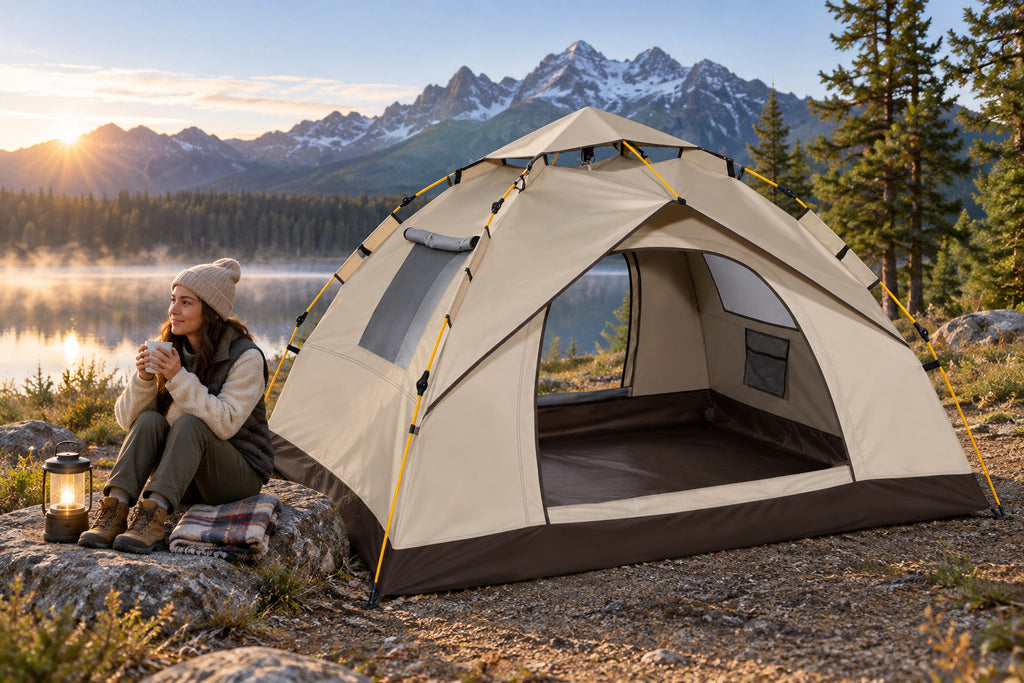
Sleeping bag liner benefits vary: a sleeping bag liner can improve hygiene, feel, and sometimes warmth, but it cannot repair an unsuitable bag rating or replace ground insulation. The Finvizo 2–4 Person Instant Pop Up Tent is only the outer shelter; you must choose every sleep-system layer separately.
What a Sleeping Bag Liner Does—and Why Results Vary
A liner creates a removable layer between you and your sleeping bag. It can reduce direct contact from body oils, sweat, and trail dirt, which may simplify routine cleaning. Always follow both makers’ care instructions because washable does not mean every liner and bag share the same cycle, detergent, or drying method.
Material changes feel, packed volume, moisture behavior, care, and potential insulation. Fleece, lightweight synthetics, silk, cotton, and specialty insulated designs make different trade-offs. Even two liners in the same material category can differ in fabric weight, shape, seams, closures, dimensions, and tested performance.
Warmth depends on the exact liner, sleeper, fit, clothing, bag, pad, humidity, moisture, shelter, and test conditions. A maker’s documented claim applies to that product and stated method. There is no responsible universal number you can assign to every liner.
The ISO 23537-1:2022 catalog entry covers thermal requirements for sleeping bags. A liner does not rewrite a bag’s certified result. Do not add an advertised liner increment to a bag label and present the sum as a new certified comfort or limit rating.
Ground insulation solves a different heat-loss path. A pad separates you from cold ground, while a liner sits inside your bag. The ASTM F3340-22 standard addresses thermal-resistance testing for camping mattresses. Use a pad’s documented test result and conditions; thickness alone does not establish insulation.
Sleeping Bag Liner Materials Compared
| Liner type | Typical strength | Typical drawback | Question to ask |
|---|---|---|---|
| Fleece | Soft, bulky layer | More weight and volume | Is a tested gain worth the bulk? |
| Light synthetic | Often quick drying | Warmth varies widely | What fabric and test are documented? |
| Silk | Compact, smooth | Price and delicate care | Is low packed weight your priority? |
| Cotton | Familiar feel | Can retain moisture | Will conditions remain dry and mild? |
| Specialty insulated | Cold-focused design | Cost or bulk | What supports the exact claim? |
“Typical” is a starting point, not a specification. Compare actual composition, dimensions, weight, drying instructions, and a source-qualified performance claim. Your use case matters: a hygiene layer for a warm hostel trip has a different job from supplemental insulation in a cold camp.
How to Choose and Use a Sleeping Bag Liner
- Define the Real Goal. Decide whether you prioritize hygiene, skin feel, travel bedding, moisture handling, or supplemental insulation.
- Check the Overnight Conditions. Review forecast low, humidity, wind, shelter, elevation, and your realistic bailout plan.
- Verify the Sleeping Bag Rating and Fit. Read maker guidance, intended-user assumptions, size, fill condition, and care while preserving loft.
- Verify the Sleeping Pad Insulation. Match its documented R-value and use conditions to the trip rather than judging thickness.
- Compare Liner Material, Size, Weight, and Care. Check actual measurements, composition, shape, packed weight, instructions, and sourced claims.
- Test the Liner With the Entire System at Home. Use planned clothing, bag, and pad; check movement, entry, bunching, moisture, and foot space.
- Use It Dry and Vent Moisture. Change wet clothing, protect the liner from moisture, and manage bag and tent ventilation as conditions allow.
- Reassess Comfort and Keep a Safe Backup. Use your warming or exit plan for shivering, numbness, confusion, or worsening cold.
The eight-step check prevents one promising accessory from hiding a weak system. Test long enough to notice restricted movement, compressed bag loft, dampness, pressure points, and difficult exits. A home test cannot reproduce every field condition, but it can expose basic incompatibility before a remote night.

Tips for Liner Warmth and Comfort
Keep enough room for your sleeping bag insulation to loft. An oversized liner or too many clothes can make the bag tight and compress insulation. If you cannot turn normally or the bag becomes visibly compressed, reconsider the combination instead of assuming more layers always mean more warmth.
Choose fleece only for a defined trade-off. Its softness and thicker construction may appeal when bulk and weight matter less, but you still need the exact product’s dimensions, mass, care, drying behavior, and substantiated claim. Never attach one fleece liner’s claimed performance to the entire category.
Choose silk or a lightweight synthetic when packed size, skin feel, or hygiene is the primary goal. Cotton may feel familiar, but consider its moisture retention for your conditions. Dry the liner and bag between nights, and never store the system wet.
Use three sourced planning figures carefully. ISO 23537-1:2022 identifies a 2022 sleeping-bag standard edition; ASTM F3340-22 identifies a 2022 camping-mattress test standard; the featured shelter offers listed 2-person and 4-person variants. None supplies a universal liner temperature gain.
Our Pick: Finvizo 2–4 Person Instant Pop Up Tent
Our outer-shelter example is the Finvizo 2–4 Person Instant Pop Up Tent. Its current page lists a preassembled hydraulic spring frame and setup under 60 seconds. It also lists dual mesh doors/windows and a detachable rainfly. These are shelter facts, not evidence that a liner adds warmth.
The Finvizo 2–4 Person Instant Pop Up Tent is only one layer around your independent sleep system. A liner, sleeping bag, sleeping pad, pillow, eye mask, bedding, heater, cot, air mattress, and other sleep furniture are not listed as included. Select each separately and confirm usable floor space, ventilation, entrances, and safe setup.
A tent cannot compensate for an inadequate sleeping-bag rating or pad R-value, just as a liner cannot compensate for inadequate shelter, wet clothing, or a missing exit plan. Match each component to its own job rather than expecting one item to solve every cold-night risk.

Common Sleeping Bag Liner Mistakes
Do not repeat a fixed temperature increase without a source tied to the exact product, method, and conditions. Do not convert a liner claim into a new certified bag rating. Perceived warmth in one review is useful personal context, not a universal controlled result.
Do not treat the liner as a replacement for an appropriate sleeping bag or insulated pad. Avoid overfilling the bag, ignoring moisture, or taking an untested combination into remote conditions. Plan dry clothing, ventilation, a suitable forecast margin, and a practical warming or exit option.
Stop and act on warning signs. Persistent shivering, numbness, confusion, loss of coordination, or worsening cold requires your planned response, not another hour of testing an accessory. A purchase decision is never more important than leaving deteriorating conditions.

A liner is only one layer of the sleep system — the shelter sets the baseline. Our Finvizo Instant Pop Up Tent runs $109.99 (was $129.99) with a 60-second hydraulic pitch and dual doors, and pairing it with a liner-covered bag keeps both the bag and the tent floor cleaner over a long season.
FAQ
Do sleeping bag liners actually make you warmer?
Some may add perceived or measured warmth, but results depend on the exact liner, fit, moisture, sleeper, bag, pad, clothing, shelter, and test conditions. No increase is guaranteed.
How many degrees does a sleeping bag liner add?
There is no universal fixed increase. Use only claims tied to the exact liner and documented conditions; never create a new certified bag rating by simple addition.
Is a fleece sleeping bag liner worth the extra weight?
It may be when softness and supplemental insulation matter more than bulk. Compare exact dimensions, weight, care, drying behavior, bag space, and sourced claims.
Can a liner replace a warmer sleeping bag or insulated pad?
No. It cannot replace a bag suited to expected conditions or a pad with suitable documented insulation, nor can it fix wet clothing or inadequate shelter.
Does the Finvizo 2–4 Person Tent include a liner, sleeping bag, pad, or eye mask?
No such sleep items are listed as included. The tent is outer shelter; you must independently select the liner, bag, pad, eye mask, pillow, bedding, heater, and furniture.
Build the Sleep System Before Adding the Liner
Start with conditions, a suitable bag and pad, then define the liner’s job and test everything together. Review the Finvizo 2–4 Person Instant Pop Up Tent as shelter only, or compare Finvizo tents. Choose every sleep component separately and keep a safe backup.
Related reading
- Essential Guide for Spring Outings
- Cheap vs Heavy Duty Wagon Cart : Is It Worth Paying More?
- Best Collapsible Wagons for Camping and Beach Trips 2026

Written by Vivian J
Product Manager at Finvizo and an avid camper who tests gear on real trails. She writes from hands-on field experience to help you pick equipment that actually holds up outdoors.