Instant Tent vs Traditional Tent: Setup Time & Durability Compared
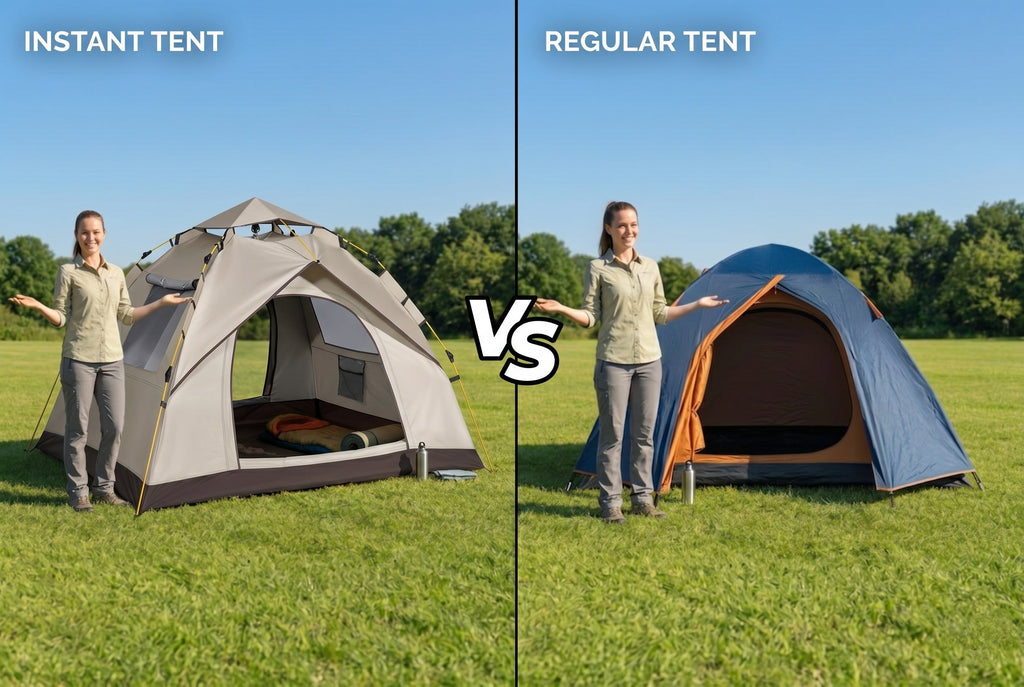
Choosing between an instant tent vs traditional tent shapes every camping trip you take. One promises 60-second setup; the other offers proven resilience in storms. This guide breaks down five critical comparison points so you know exactly which shelter fits your style.
Quick Comparison: Instant vs Traditional at a Glance
| Factor | Instant Tent | Traditional Tent |
| Setup Time | 45-90 seconds | 8-15 minutes |
| Weight | 15-25% heavier | Optimized lighter |
| Pack Size | Large, bulky | Compact, smaller |
| Durability | 3-7 year lifespan | 5-10 year lifespan |
| Wind Resistance | Variable (20-35 mph) | Superior when staked well |
| Repairability | Harder (integrated poles) | Easier (modular parts) |
| Best For | Car camping, families | Backpacking, harsh weather |
What Is an Instant Tent?
An instant tent uses a pre-attached pole system built into the tent body. You remove it from the bag, unfold the fabric, and extend the poles. The frame snaps into place in under 90 seconds. This quick setup camping tent design eliminates threading poles through sleeves or clipping them individually. The trade-off is bulk: packed size runs 1.8 to 3.7 times larger than comparable traditional tents, and weight increases by 15-25%. For car campers with trunk space, this rarely matters. For backpackers counting ounces, it is a dealbreaker.

What Is a Traditional Tent?
A traditional tent ships with separate poles, clips, and rainfly. You lay the body flat, insert poles through sleeves or attach clips, then secure the fly. A solo camper needs 8-15 minutes for a standard 4-person dome. The traditional pole tent design has existed for decades because it works. Separate components mean simpler field repairs: break a pole section and you swap in a $12 replacement. The modular approach extends usable life to 5-10 years. Packability is another win: a 2-person backpacking tent fits inside a sleeping bag compartment.
Setup Time: The 60-Second Myth vs Reality
Manufacturers love claiming "60-second setup." Real-world testing shows first-time users average 45-90 seconds in calm weather. Bad weather doubles those times as campers battle wind while extending poles. The instant tent vs traditional tent speed gap is real but not always as dramatic as ads suggest. Traditional tents never promise speed. A practiced camper sets up a 4-person dome in 8 minutes. However, that extra time yields a tighter, more stable pitch. For family camping gear USA buyers, if you move campsites daily, instant saves 10+ minutes per setup. If you basecamp for three days, durability matters more.

Durability and Weather Resistance Compared
Durability separates these categories more than any other factor. Instant tents rely on thin fiberglass poles under constant tension. Even when folded, poles store energy that strains joints. Typical lifespan ranges from 3 to 7 years. Traditional tents use thicker fiberglass, aluminum, or steel poles that rest unstressed in the bag. With proper care, a quality traditional tent lasts 5 to 10 years. Repairability favors traditional designs: break a hub joint on an instant tent and you often need a whole new tent. Break a pole on a traditional tent and you replace just that section.
Storm testing reveals sharp weather resistance differences. Premium instant tents with steel frames handle 30-35 mph winds and heavy rain. Budget models under $100 fail at 25 mph gusts. The boxy cabin shape of many instant tents catches wind like a sail. Traditional dome tents excel here. The sloped aerodynamic shape sheds wind. In storm tests, traditional domes outperformed instant cabins in sustained 30 mph winds with rain. That said, a poorly staked traditional tent collapses faster than a well-staked instant one. Technique matters more than design in moderate weather.

Which One Should You Choose?
Your choice depends on three questions: How do you travel? What weather do you face? How long do you keep gear?
Choose an instant tent if:
- You car camp with family and want hassle-free setup
- You camp in fair to moderate weather (under 25 mph winds)
- You value speed over packability and replace gear every 4-5 years
- You camp solo and need to pitch fast before dark or rain hits
Choose a traditional tent if:
- You backpack or hike to campsites where weight and bulk matter
- You camp in mountainous or coastal areas with unpredictable storms
- You want 10-year durability and easy field repairs
- You prioritize weather resistance and ventilation over setup speed
For most family camping gear USA buyers, a quality instant tent strikes the right balance. The Finvizo 2-4 Person Instant Pop Up Tent uses a reinforced steel-wire frame tested to 25 mph sustained winds. It sets up in 3 seconds yet includes 8 guyout points for storm security. That combination serves weekend campers who refuse to sacrifice safety for convenience.
FAQ: Instant Tent vs Traditional Tent
How long does it take to set up an instant tent?
Quality instant tents set up in 45-90 seconds for experienced users. First-timers need 1-2 minutes. Bad weather can double setup time. True pop up tents deploy in under 10 seconds but require practice to fold back down.
Are instant tents as durable as traditional tents?
Generally no. Instant tents last 3-7 years due to stressed fiberglass poles. Traditional tents last 5-10 years with modular, replaceable parts. Premium steel-frame instant models narrow the gap significantly.
Which tent is better for beginner campers?
Instant tents win for beginners. There are no poles to thread, no clips to mismatch, and no rainfly orientation puzzles. You unpack, extend, and stake. Even children can manage setup independently within one trip.
Can instant tents handle heavy rain and wind?
Premium instant tents with steel frames handle 25-35 mph winds and heavy rain. Budget models struggle above 20 mph. Always use all guylines and upgrade stakes for storm conditions regardless of tent type.
Is an instant tent worth the higher price?
For car campers and families, yes. The time savings justify a $30-50 premium. For backpackers or extreme-weather campers, no. Traditional designs offer better durability, weight, and storm performance per dollar.
Related Guides
Still researching your next shelter? These Finvizo guides dive deeper into specific tent categories:
- The 3 Best Camping Tents for Weekend Getaways (2026)
- 2 Person Tent Buying Guide
- Hiking Backpack Size Guide
- 10 Best Family Camping Picks 2026
Sources: Outside Online Instant vs Camping Tents | Outdoor Tech Lab Storm Testing Data