How to Adjust Backpack Straps for Maximum Comfort on the Trail
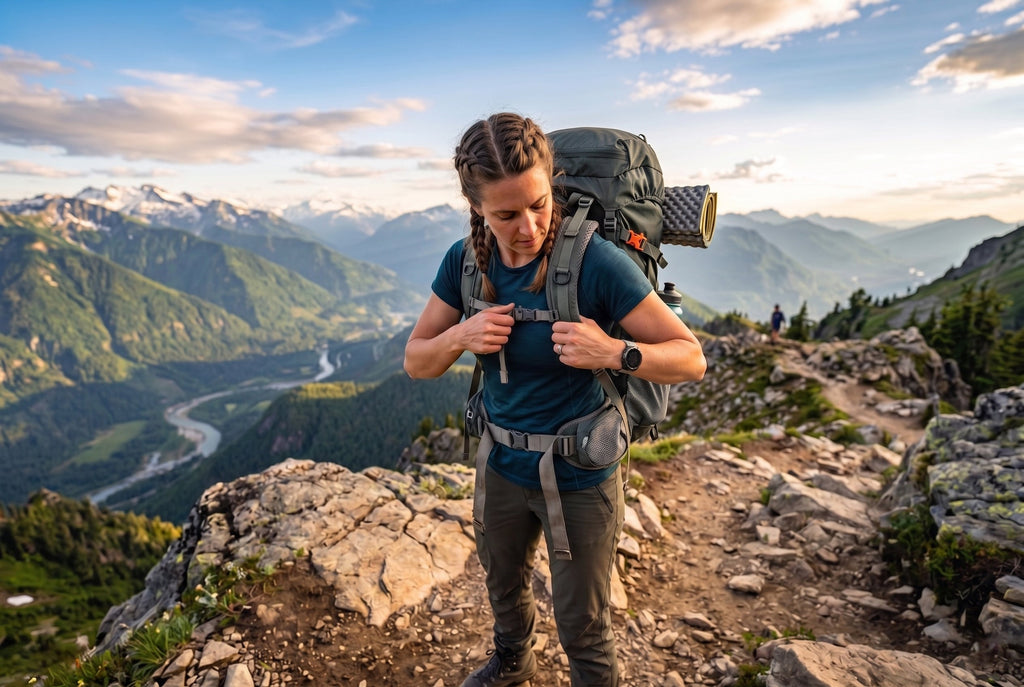
Shoulder pain, numb fingers, and soreness can turn an epic hike into a slog. Learning to adjust backpack straps comfort properly is the difference between enjoying every mile and counting down to the trailhead. With the right technique, 80% of your pack's weight rests on your hips.
Why Proper Strap Adjustment Changes Everything
A poorly adjusted pack makes 30 pounds feel like 60. When weight hits your shoulders, every step creates jarring impact. The golden rule of backpack fit adjustment is simple: 80% on hips, 20% on shoulders. Hip bones support weight all day. Shoulder muscles cannot.
Numb fingers and burning trapezius muscles signal improper fit. Symptoms appear 2-3 miles in when small errors compound. Taking 10 minutes to adjust hiking backpack straps before hitting the trail pays dividends across every mile.
What You'll Need
Grab your backpack loaded with 15-20 pounds. A mirror or friend lets you check fit from the side. Most importantly, bring 10 minutes of patience. Rushing guarantees discomfort later.
Step-by-Step: Adjust Backpack Straps Comfort
- Step 1: Start With the Hip Belt (It's Counterintuitive!)Most hikers reach for shoulder straps first. Wrong. Your hip belt adjustment is the foundation. Wrap the padded belt around your hip bones — the bony points at the front of your hips, not your waist. Tighten until snug. Weight should transfer to your legs immediately.The pad should wrap the front of your hip bones with the buckle centered. If it sits above or below, adjust torso length. This embodies backpack ergonomics outdoor enthusiasts live by. Done right, shoulders barely feel the load. This is how you adjust backpack straps comfort the right way.
- Step 2: Adjust Shoulder Straps for Perfect Torso LengthNow engage shoulder strap fitting. Pull straps snug against your body without gaps. No space between shoulder and padding. The pack top should align with your shoulder tops.If straps dangle above shoulders, your torso length backpack is too long. If they pull hard before tightening, it is too short. Most packs offer 3-4 inches of adjustment. Find your setting.
- Step 3: Fine-Tune Load Lifters and Sternum StrapLoad lifter straps angle back from the top of shoulder straps toward the pack. Pull them to roughly a 45-degree angle. This pulls weight closer to your center of gravity. Too flat or steep and they lose effect.The sternum strap position matters more than most realize. Buckle it 1 inch below your collarbones. Tighten just enough to stabilize shoulder straps. Do not overtighten. It stabilizes, not carries weight.
- Step 4: Balance and Stabilizer AdjustmentsSide compression straps keep the load tight against your back. For proper weight distribution hiking, keep heavy items centered and close to your spine. Balance left-right weight evenly. A lopsided pack pulls you off-balance.Backpack strap tightening on stabilizers pulls the pack toward your lumbar region. If you feel side-to-side motion, tighten the stabilizers on that side.
- Step 5: The Walk Test — Validate Your SetupWalk for 5 minutes on flat ground. Check three things: no shoulder pain, no gap between back and pack, and hips carrying most weight. Make micro-adjustments to any strap that feels off.If shoulders burn, loosen them and tighten the hip belt. If the pack sways, cinch stabilizers. This validates comfort before miles of trail.
Pro Tips for All-Day Comfort
Retighten the hip belt after 30 minutes. Pack contents settle and the fit loosens. A quick quarter-turn restores weight transfer to your hips.

Use trekking poles to reduce sway. Loosen shoulder straps slightly on uphills, tighten on downhills. Take the pack off every 2 hours for a 5-minute break.
For a pack with all the adjustment points you need, consider the Finvizo 50L Ventilated Hiking Backpack. It features adjustable torso length, padded hip belt, load lifters, and mesh back panel for airflow. The suspension handles 30-40 pound loads comfortably for adjust backpack straps comfort that matches trekking backpack comfort and Appalachian Trail backpack fit standards.
Common Mistakes to Avoid
Here are the most common fit problems and fixes:
| Mistake | Why It Hurts | The Fix |
| Wearing pack too low | Strains shoulders | Raise hip belt to hip bones |
| Skipping hip belt | 100% weight on shoulders | Always buckle hip belt first |
| Loose shoulder straps | Pack sways, unstable | Snug but not carrying weight |
| Wrong torso size | Cannot adjust properly | Measure torso before buying |
| Overtightened sternum strap | Restricts breathing | Just snug enough to stabilize |
These mistakes cause most backpack pain relief issues. Your hiking gear setup routine should include a 5-minute strap adjustment before every hike.
For more expert guidance, read REI's backpack fitting basics and Outside Online's expert-tested backpack fitting guide.
Frequently Asked Questions
How to adjust backpack straps for hiking comfort
Buckle hip belt around hip bones for 80% weight. Adjust shoulder straps snugly with no gaps. Set load lifters at 45 degrees and sternum strap 1 inch below collarbones. Walk 5 minutes and fine-tune.
Why does my backpack hurt my shoulders when hiking
You're carrying too much weight on shoulders instead of hips. The hip belt should carry 80% of load. Tight straps, a low pack, or wrong torso length cause strain.
How to tighten backpack hip belt properly
Wrap around hip bones, not waist. Tighten until snug. Most weight should rest on your hips.
How should a hiking backpack fit on your back
Hip belt wraps hip bones carrying 80% of weight. Shoulder straps follow your contours. Pack stays close without swaying.
Where should sternum strap sit on hiking backpack
About 1 inch below collarbones. Snug enough to stabilize without restricting breathing.
Ready for Your Next Adventure?
Now you know how to adjust backpack straps for comfort. The foundation stays the same: hips carry weight, shoulders stabilize, and micro-adjustments keep everything dialed.

The Finvizo 50L Ventilated Hiking Backpack gives you every adjustment point for a perfect fit. Hit the trail with confidence.