Balaclava vs Ski Mask vs Neck Gaiter: Winter Face Cover Guide
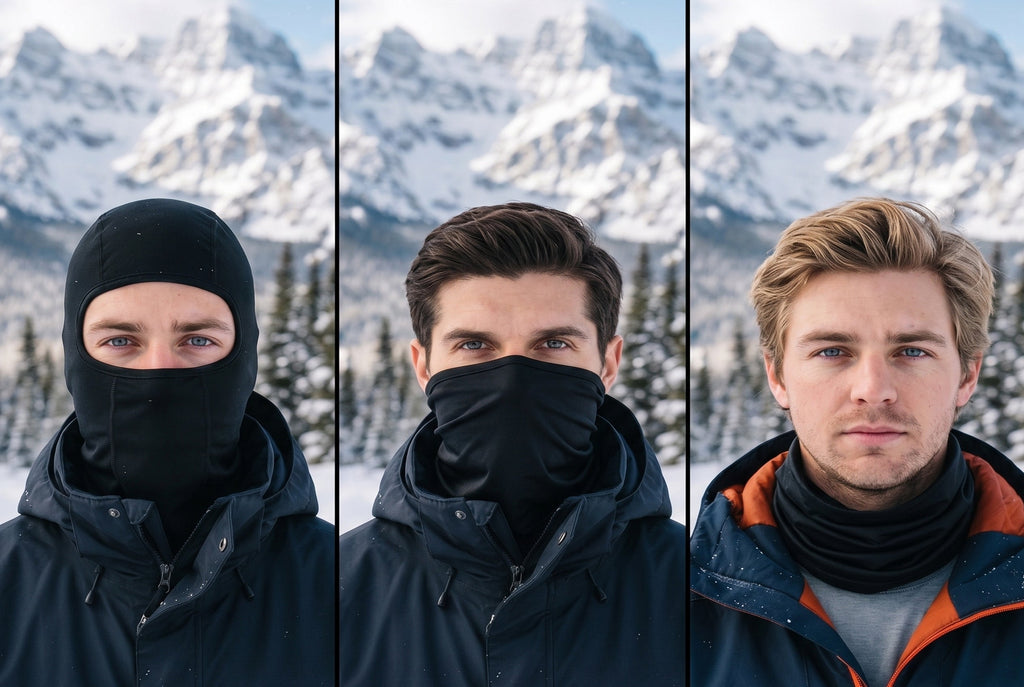
When the temperature drops and you're gearing up for the slopes or snowmobile track, choosing the right face protection matters. Understanding balaclava vs ski mask vs neck gaiter differences helps you pick the perfect winter face cover for your conditions.
Quick Comparison: Balaclava vs Ski Mask vs Neck Gaiter at a Glance
When comparing balaclava vs ski mask vs neck gaiter options, these three winter face covers serve different purposes on the mountain:
| Feature | Balaclava | Ski Mask | Neck Gaiter |
| Face Coverage | Full head + neck + face | Full head + face (eye holes) | Neck + lower face (adjustable) |
| Warmth Rating | ★★★★★ Maximum | ★★★★☆ High | ★★★☆☆ Moderate |
| Breathability | ★★★☆☆ Good | ★★★☆☆ Good | ★★★★★ Excellent |
| Versatility | ★★★☆☆ 2-3 configurations | ★★★☆☆ Limited | ★★★★★ 12+ ways |
| Best For | Extreme cold, mountaineering | Casual cold-weather use | Skiing, year-round |
| Typical Material | Fleece, wool blends | Acrylic, wool knit | Polyester microfiber |
| Packability | Bulky | Moderate | Ultra-compact |
This balaclava vs ski mask vs neck gaiter breakdown shows each excels in different conditions — balaclavas for warmth, gaiters for versatility, ski masks for budget.

What Is a Balaclava?
In the balaclava vs ski mask vs neck gaiter comparison, the balaclava offers the most coverage. It originated during the Crimean War's Battle of Balaclava (1854). As REI's layering guide explains, proper face coverage is critical for winter comfort. Thermal fleece and windproof materials make balaclavas essential for cold weather protection. See Outside Online's ski dressing guide.
Modern balaclavas serve skiers and mountaineers who need seamless protection from crown to collarbone — no gaps, consistent warmth.

What Is a Ski Mask?
A ski mask is a close-fitting hood with openings for eyes and sometimes mouth and nose. The traditional 3-hole design — two eyes plus one mouth — creates a distinctive look.
In casual US conversation, "ski mask" and "balaclava" are used interchangeably, but they differ technically. Ski masks typically use knit materials like acrylic or wool. While less popular in modern technical outdoor gear, they remain a budget-friendly option for casual cold-weather use.
What Is a Neck Gaiter?
When evaluating balaclava vs ski mask vs neck gaiter versatility, the neck gaiter stands out. It is a tube of stretchy fabric worn around your neck and pulled up to cover your lower face. Also called a neck warmer, buff, or tube scarf, it's the most versatile option with 12+ configurations.
Material options span both seasons: lightweight polyester microfiber for summer, fleece-lined for winter. Wear it as a face mask, headband, beanie, wristband, or neck warmer. This adaptability makes it a year-round staple.
Coverage Comparison: Which Protects More?
Evaluating balaclava vs ski mask vs neck gaiter coverage reveals clear differences. A balaclava offers the most complete coverage — hood plus face mask in one piece. No gaps, full thermal enclosure.
A ski mask provides similar coverage but distinct eye and mouth holes create gaps. A neck gaiter wraps around your neck and pulls up to cover lower face. For maximum coverage, the balaclava wins. For adjustability, the neck gaiter takes the crown.
Warmth & Insulation: Staying Cozy on the Slopes
Balaclavas deliver the highest warmth thanks to full-head fleece enclosure. Below 0°F, the seamless design eliminates every cold entry point, making it essential for mountaineering and snowmobiling.
Ski masks offer high warmth but knit construction can create air gaps. Neck gaiters provide moderate warmth — fleece-lined versions handle cold days but pair with a beanie for full protection. Guide: below 0°F grab a balaclava, 0-20°F works with either option, 20-40°F any choice works.
Breathability & Comfort During Active Sports
High-output sports create sweat that must escape. The neck gaiter wins here — its open bottom lets hot air out, preventing clammy buildup. Balaclavas with vented panels offer good breathability, while ski masks can get soggy. For resort skiing, the gaiter's airflow stands out. For backcountry, the balaclava takes priority.

Versatility & Style Options
A balaclava offers 2-3 configurations, a ski mask 1-2, and a neck gaiter delivers 12+ across every season. That year-round versatility is where the gaiter dominates — winter face cover in January, sun shield in July. Finvizo's 6-Pack Neck Gaiter covers all seasons.
Price & Value Comparison
Budget balaclavas run $8-15, premium $20-40. Ski masks are cheapest at $5-12, premium $15-30. Neck gaiters fall at $6-12, premium $15-25.
Multi-packs deliver the best per-unit value. Finvizo's 6-Pack Balaclava handles extreme cold while the 6-Pack Neck Gaiter covers everything else. The gaiter's year-round utility makes it the best long-term value.
Which Winter Face Cover Should You Choose?
Making the final balaclava vs ski mask vs neck gaiter decision comes down to your specific needs. Consider your local climate, primary activities, and how much versatility you want from a single piece of gear:
- Choose a Balaclava if: you face sub-zero temps, need wind protection, or spend long hours mountaineering or snowmobiling.
- Choose a Ski Mask if: you want budget-friendly casual cold-weather gear for short outdoor exposures.
- Choose a Neck Gaiter if: you want versatile year-round coverage, ski or snowboard frequently, or prefer easy on/off adjustment.
Still debating balaclava vs ski mask vs neck gaiter? Many outdoor enthusiasts keep both a balaclava and neck gaiter in their gear bag for maximum flexibility.
FAQ — Balaclava vs Ski Mask vs Neck Gaiter
Is a balaclava warmer than a neck gaiter?
Yes. A balaclava provides full head and neck coverage in one piece, eliminating gaps. Neck gaiters protect the lower face and neck but require a separate hat for full warmth.
Can I wear a neck gaiter as a balaclava?
Partially. Pull a neck gaiter up over your nose and wear a beanie on top to approximate balaclava coverage, though it's not as seamless in extreme conditions.
Why do ski masks have a bad reputation?
The 3-hole design is often portrayed in media as criminal attire. Modern outdoor brands use "balaclava" or "face cover" to avoid this association.
What's the best face cover for snowboarding?
Neck gaiters are most popular among snowboarders for breathability and easy adjustment. For very cold days, a fleece-lined balaclava provides superior warmth.
Related Winter Gear Guides from Finvizo
Build your complete cold-weather kit with Finvizo — shop balaclavas, neck gaiters, and adventure-ready accessories today.
Related Guides
- Summer Neck Gaiter Styles for Sun Protection & Adventure
- Balaclava vs Ski Mask vs Neck Gaiter: Winter Face Cover Guide
- Hiking Backpack Size Guide
Understanding balaclava vs ski mask vs neck gaiter differences helps you build a smarter cold-weather kit.