Best Sleep Masks for Kids: Travel & Bedtime Picks
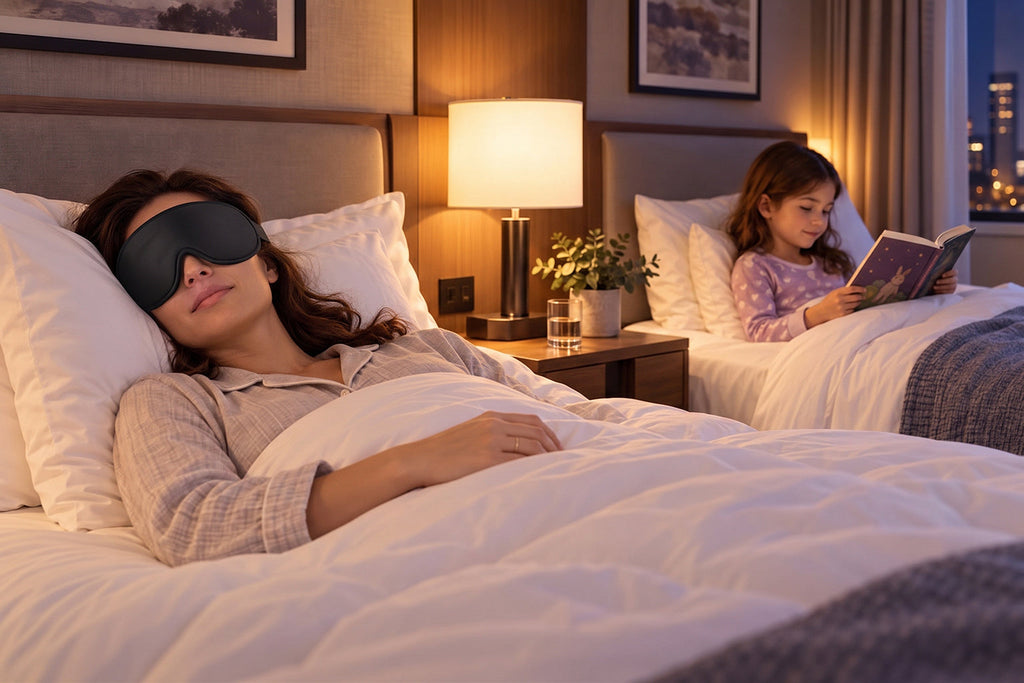
A kids sleep mask can reduce distracting light, but a kids sleep mask must fit comfortably, stay clear of breathing, and be used with adult supervision. Choose a child-sized, soft, simple design for older children; never place an adult mask on a toddler or let any child sleep in one unsupervised.
For parents comparing shapes, the Finvizo 3D Contoured Sleep Eye Mask is a useful adult-size structure reference. Its deep eye pockets show how clearance can reduce eyelid and lash contact. However, it is not a children’s product, and you should not put this adult-size mask on a child.
What to Look for in a Kids Sleep Mask
Start with the child, not the pattern. A suitable children sleep mask should match head size without requiring a tightly shortened strap. Check that the mask cannot slide over the nose or mouth, that it releases easily, and that your child can remove it without help. If the fit is uncertain, skip the mask and darken the room instead.
Age, supervision, and safe fit
Avoid sleep masks for infants and toddlers. Small children may not reliably report pressure, heat, blocked vision, or breathing interference. For an older child, use the mask only after a supervised awake trial. Ask your child to sit up, lie down, roll gently, and remove it independently before considering bedtime or travel use.
The CDC explains that sleep needs vary by age and that sufficient sleep supports health and emotional well-being. A mask is only a light-management accessory; it cannot replace a consistent schedule, a calming routine, or evaluation of persistent sleep problems.
Material, seams, and adjustability
Look for soft, breathable fabric, smooth edges, and minimal decoration. Avoid beads, detachable eyes, hard buckles near the temple, long cords, and glitter that can shed. A flat elastic band may work for some older children, but you should reject any strap that leaves a mark after a short supervised test.
Measure around the head where the band will sit, then compare that number with the maker’s stated range. Do not rely on “one size” language. A mask that shifts after 10 minutes is not travel-ready, while a band that feels secure only when tight is also the wrong size.

Top Picks and Comparison
Your best category depends on the setting. The table compares practical design types rather than claiming that one mask fits every child. Because children vary, verify the actual product’s age guidance, dimensions, construction, and warnings before purchase.
| Design type | Best use | What you should check | Main trade-off |
|---|---|---|---|
| Child-sized flat mask | Short flights and quiet time | Soft seams and easy removal | May touch lashes |
| Child-sized contoured mask | Older children sensitive to eye contact | Stable nose clearance | Bulkier in side sleep |
| Simple fabric kids eye mask | Occasional hotel use | No loose decorations | Light may enter near nose |
| Room-darkening alternative | Toddlers or uncertain fit | Safe shade setup | Less portable |
Best for travel: simple and packable
For an older child on a flight, choose a washable child-size model with no bulky ornamentation. Test it at home before departure. Pack it in a clean pouch and remove it during meals, bathroom trips, or any moment when your child needs full awareness. Never use it as a substitute for monitoring.
Best for bedtime: the least complicated option
At home, start with environmental changes: dim screens, close curtains, and maintain a predictable sequence. The American Academy of Sleep Medicine consensus recommends 10–13 hours per 24 hours for ages 3–5, 9–12 hours for ages 6–12, and 8–10 hours for ages 13–18. A mask is only one environmental aid.
Our Pick: A Structure Reference for Adults
The Finvizo 3D Contoured Sleep Eye Mask uses contoured memory foam, deep 3D eye pockets, an adjustable elastic strap, and a shaped nose area. Those features illustrate the difference between flat fabric and eye-cavity clearance. It should be hand washed and air dried.
This is an adult-size product, not a toddler sleep mask or certified children’s sleep mask. Do not tighten it down to make it fit a smaller head, and do not let a child wear the adult model. If you are shopping for your own mask while selecting a separate child-size option, it can serve as the adult choice.

Flat Kids Eye Mask vs Contoured Design
A flat mask is thinner, easier to pack, and often simpler to wash. It can also press against eyelashes or shift when your child changes position. A contoured child-size design creates more space over the eyes, but extra structure adds bulk and may produce side gaps if the face shape does not match.
Do not assume “3D” automatically means safer or more comfortable. The decisive factors are correct sizing, soft contact points, easy independent removal, and stable placement above the nose. You should also inspect the mask after every wash for stretched elastic, exposed foam, loose stitching, or detached trim.
Who Should Buy What?
Older children taking long trips
A correctly sized travel mask may help an older child settle when cabin or hotel light is unavoidable. Use it during an awake practice session first, keep the band comfortably loose, and check positioning regularly. Pair it with familiar pajamas or a quiet story rather than adding multiple unfamiliar sleep accessories at once.
Children who dislike anything touching their eyes
Try blackout curtains or a portable room-darkening solution before a mask. If your older child actively requests one, consider a genuinely child-sized contoured model and supervise the test. Stop immediately if your child reports pressure, warmth, itching, headache, fear, or difficulty removing it.
Toddlers and children who cannot remove a mask
Do not use one. A toddler sleep mask is not an appropriate solution merely because it has a playful print. Environmental light control keeps the face unobstructed and is the better choice when a child cannot understand instructions, communicate discomfort, or remove the item independently.

FAQ
Are sleep masks safe for children?
They may be appropriate for some older children when specifically child-sized, simple, correctly fitted, and supervised by an adult. They are not suitable for infants or toddlers. Always follow the manufacturer’s age guidance and stop use if the mask shifts, feels tight, causes irritation, or approaches the nose or mouth.
Can a child use an adult sleep mask?
No. An adult mask may be too wide, too loose, or require unsafe overtightening. Choose a product made for the child’s measured head size. The Finvizo 3D Contoured Sleep Eye Mask discussed here is an adult reference and should not be placed on a child.
Does a mask help a child sleep on a plane?
It can reduce light for an older child who already tolerates the mask, but it cannot guarantee sleep. Test it before travel, supervise its use, and support the usual routine. Cabin noise, schedule disruption, discomfort, and excitement can still affect sleep.
How often should you wash a kids sleep mask?
Follow the specific care label and wash after travel, illness, visible soil, or regular skin contact. Dry it completely before reuse. Inspect the elastic and seams every time; replace the mask if the foam is exposed, decorations loosen, or the band no longer holds a safe position.
Choose the Right Mask for Each Person
Choose a purpose-built, child-size mask only for an older child who can remove it independently, and keep adult supervision central. For your own travel kit, review the Finvizo 3D Contoured Sleep Eye Mask for deep-pocket adult comfort and an adjustable fit.
Related reading
- Read more Finvizo gear reviews
- 3D Sleep Mask vs Flat Mask: Pressure Test & Complete Buyer's Guide
- How to Pack a Folding Wagon for Beach Days with Kids: A Complete Guide

Written by Vivian J
Product Manager at Finvizo and an avid camper who tests gear on real trails. She writes from hands-on field experience to help you pick equipment that actually holds up outdoors.