Half vs Full Balaclava: Which Coverage Do You Need?
A half balaclava prioritizes airflow and fast adjustment; a half balaclava suits active commutes and milder cold. Choose full coverage when wind, low temperatures, or long exposure make cheek, chin, and neck protection more important. Your activity level, helmet fit, visibility, and local conditions should decide—not style alone.
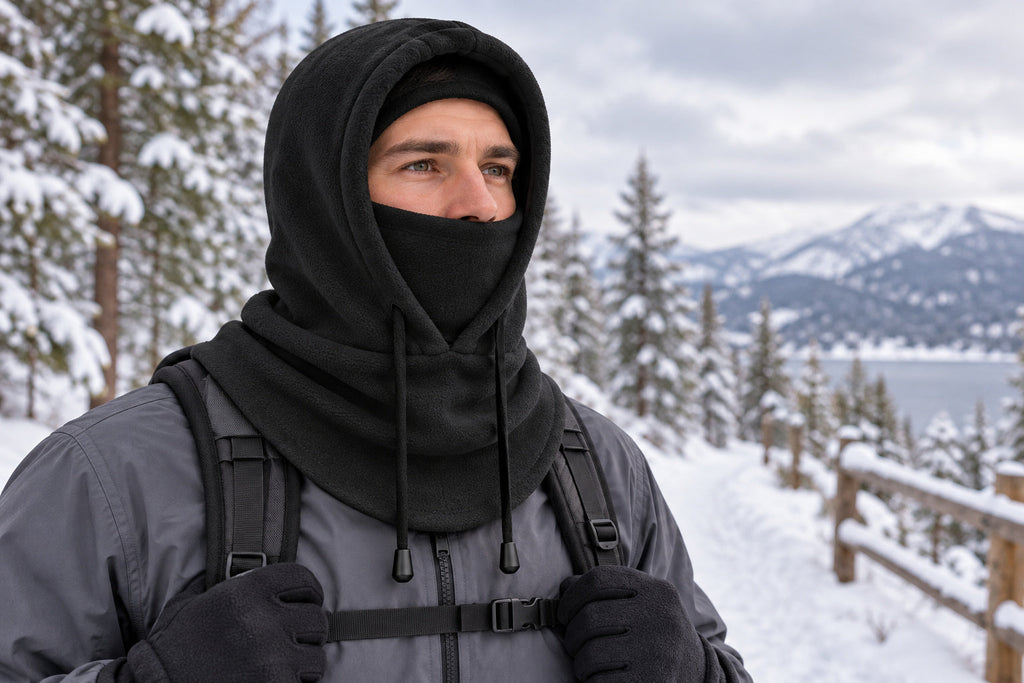
The Finvizo Fleece Balaclava Ski Mask belongs firmly in the full-coverage category. It is not a half-face mask. Its polar-fleece body and extended neck are designed for broader cold-weather coverage, making it a useful comparison point when you are deciding whether an open lower face is practical.
What to Look for in a Half Balaclava
First define what “half” means on the product page. Sellers may use the phrase for a lower-face tube, an open face balaclava, or a hood that leaves most of the face exposed. A 3 hole balaclava is different again: it normally has separate eye and mouth openings. Compare the actual pattern, not only the title.
Coverage and weather exposure
Map the exposed areas. A lower-face half style can cover your nose, mouth, chin, and neck while leaving the crown bare. An open-face hood covers your head and neck but leaves a large facial opening. A full face balaclava covers more skin, although the eye area and sometimes a breathing opening remain exposed.
OSHA notes that cold stress risk is influenced by air temperature, wind speed, humidity, wetness, and contact with cold surfaces. Its cold-stress guidance also emphasizes appropriate clothing layers. You should treat facewear as one part of a system, not complete protection by itself.
Breathing, moisture, and intensity
Higher output produces more heat and moisture. During a 30-minute run, an open lower face may feel better than fleece over your mouth. During a slow chairlift ride, the same exposure can become uncomfortable. Choose vents or a movable face panel when you expect activity to alternate between hard effort and stillness.
Moist fabric can increase cooling. Carry a dry spare for long outings, especially if you sweat into the mouth area. Never assume “breathable” means the fabric will remain dry, and do not cover ventilation openings in a helmet or use drawstrings where they can snag on equipment.

Top Picks and Coverage Comparison
The best choice changes with exposure and pace. The table gives a practical starting point; you should adjust for wind chill, precipitation, duration, personal cold sensitivity, and the instructions for your helmet or workplace equipment.
| Style | Typical coverage | Best matched use | Main limitation |
|---|---|---|---|
| Half lower-face mask | Nose, mouth, chin, neck | Running and active commuting | Head and upper face exposed |
| Open-face balaclava | Head, ears, neck | Flexible daily layering | Central face exposed |
| 3-hole balaclava | Most of head and face | High coverage with mouth opening | Fixed openings may misalign |
| Full fleece balaclava | Head, cheeks, chin, extended neck | Cold, wind, lower-output use | More heat and moisture buildup |
Best for running and cycling commutes
A half style can work when you need quick venting and your hat or helmet already covers the crown and ears. Check peripheral vision before moving, and confirm that the mask does not redirect breath onto eyewear. For cycling, never let fabric, toggles, or cords interfere with straps, lights, or hearing.
Best for skiing, waiting, and exposed work
Full coverage usually makes more sense when you spend longer periods in wind or alternate between movement and waiting. The CDC/NIOSH cold-stress resource identifies warning signs such as uncontrolled shivering and confusion. Face coverage does not eliminate risk; you still need breaks, dry layers, and a warm shelter plan.
Our Full-Coverage Pick
The Finvizo Fleece Balaclava Ski Mask is a full-face fleece design made from polar fleece, with an extended neck and adjustable drawstrings. It is listed as one size fits most and comes in seven variants. Those details favor adaptable cold-weather coverage, but fit still varies by person.
This product is not a half balaclava. Choose it when fuller cheek, chin, head, and neck coverage is the goal. Keep the drawstrings secured away from moving parts, test your field of view, and verify compatibility with your helmet. If you mainly need high-output ventilation, a lighter half style may remain the better tool.

Half Balaclava vs Full Face Balaclava
A half design wins on fast venting, compact packing, and the ability to expose more skin without removing your hat. It can be enough for a brisk 20-minute commute in moderate cold. Its weakness is discontinuous coverage: wind can reach your forehead, temples, or the gap between the mask and hat.
A full design creates a more continuous layer across your head, cheeks, chin, and neck. Fleece adds insulation but can feel too warm during hard effort. The face opening must stay aligned, and every helmet combination needs a stationary fit test. More fabric is useful only when it does not obstruct sight, breathing, hearing, or equipment.
Where an open face balaclava fits
An open-face design is the middle ground. You keep crown, ear, and neck coverage while leaving the central face uncovered. Some models can pull up over the mouth, but you should confirm that configuration from the actual construction. Do not assume every hood can safely convert between several advertised wearing modes.
Where a 3 hole balaclava fits
A three-opening pattern offers extensive skin coverage with dedicated eye and mouth holes. Alignment matters: openings that sit correctly on one face may pull or restrict another. Test speech, vision, and breathing before outdoor use. If the eye holes narrow your peripheral view, choose a larger opening rather than stretching the fabric.
Who Should Buy What?
Active commuters and runners
Choose a half style if you run warm, need frequent venting, and already have separate head protection. Select quick-drying fabric and an easily lowered panel. Carry a warmer backup when the forecast includes stronger wind, freezing precipitation, or delays that could turn an active trip into a stationary wait.
Skiers, spectators, and slower winter travelers
Choose fuller coverage when your pace is lower or wind exposure is sustained. The Finvizo Fleece Balaclava Ski Mask offers polar fleece and an extended neck for that use case. You should still layer according to conditions and take the mask off to dry if the mouth area becomes damp.
Workers using protective equipment
Follow workplace rules and equipment-maker instructions. A mask must not compromise respirator seals, hard-hat suspension, hearing protection, communication, or visibility. Avoid modifications and dangling cords. If a supervisor or safety program specifies approved cold-weather gear, that requirement takes priority over a general consumer recommendation.

Our Finvizo Fleece Balaclava shows the full-coverage end of the comparison: $17.99, nine colors, windproof fleece with an adjustable hood that seals the gaps a half balaclava leaves open. At that price, owning both styles costs under $36 and covers January commutes through April touring.
FAQ
Is a half balaclava warmer than a neck gaiter?
It depends on the construction. A half mask shaped over the nose and cheeks may stay in place better, while a thick neck gaiter may provide more insulation below the chin. Compare material, coverage, fit, wind, and activity rather than relying on the category name.
Can you wear a full balaclava under a helmet?
Only if the helmet maker permits it and the combination does not alter fit. Use a thin enough layer, fasten the helmet again, and check vision, hearing, breathing, and strap position. Bulky fleece can change how a helmet sits, so test before entering traffic or a ski area.
Does full face coverage prevent cold stress?
No. It may reduce exposed skin and improve comfort, but cold stress depends on conditions, wetness, duration, activity, clothing, and individual factors. Monitor yourself and companions, use dry insulating layers, schedule warming breaks, and seek help when warning signs appear.
How should a balaclava fit?
It should stay in place without painful pressure, restricted breathing, blocked peripheral vision, or exposed gaps you intended to cover. Check the neck overlap and all equipment interfaces. “One size fits most” is not a guarantee, so return a mask that does not fit your face and head safely.
Match Coverage to Your Coldest Moments
Pick a half style for ventilation and flexible movement; pick full fleece when continuous coverage matters more. If your use case calls for the latter, explore the Finvizo Fleece Balaclava Ski Mask, then test its fit, visibility, drawstrings, and helmet compatibility before heading outside.
Related reading
- Read more Finvizo winter guides
- Balaclava vs Ski Mask vs Neck Gaiter: Winter Face Cover Guide
- Ultimate Buying Guide for Summer Sun Protection Gear: Neck Gaiter, Arm Sleeves & Balaclava

Written by Vivian J
Product Manager at Finvizo and an avid camper who tests gear on real trails. She writes from hands-on field experience to help you pick equipment that actually holds up outdoors.